

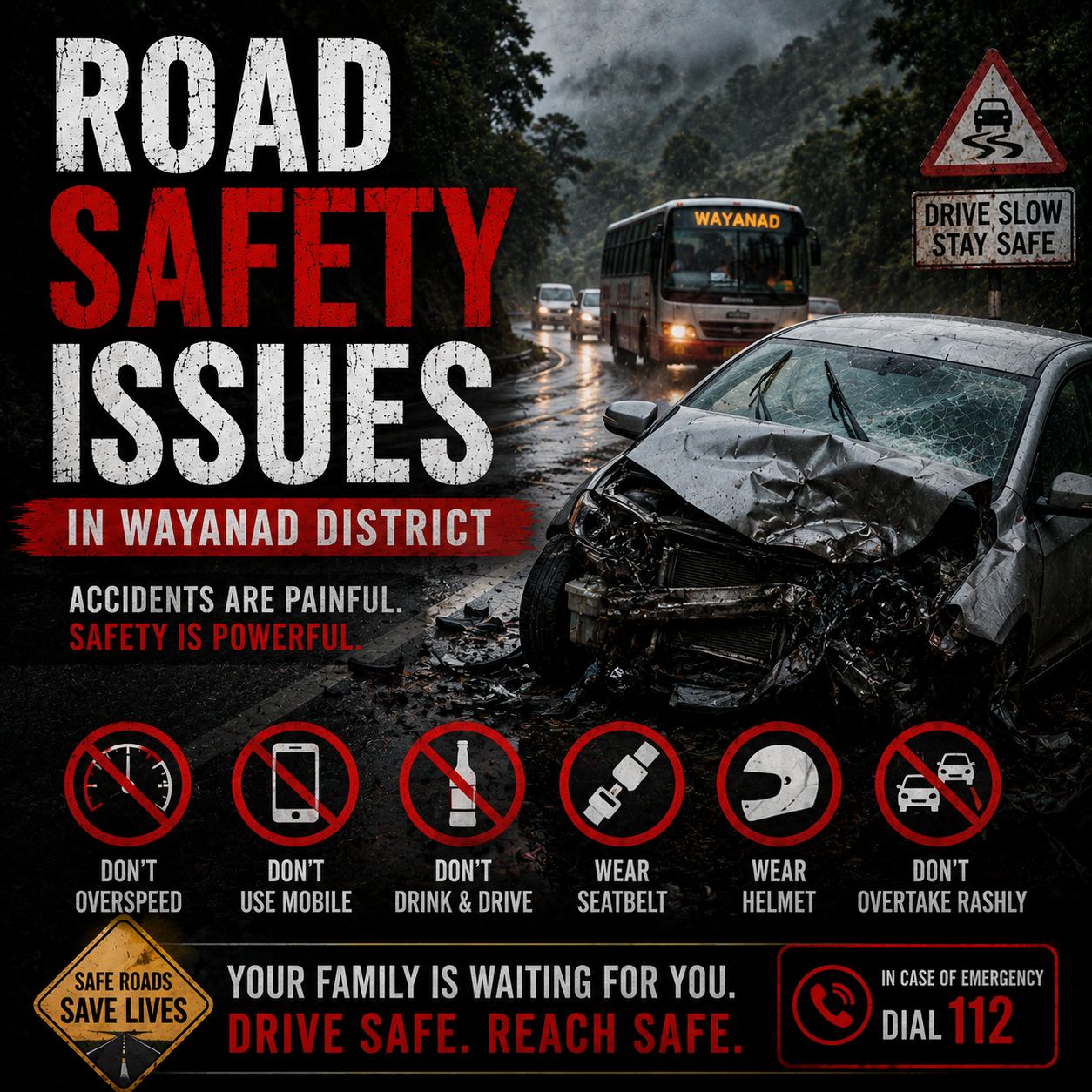
Wayanad district, located in the state of Kerala, is one of the most beautiful hill regions in India. Known for its forests, wildlife, and tourism, Wayanad attracts thousands of visitors every year. However, along with its natural beauty, the district faces serious challenges related to road safety.
The unique geographical features of Wayanad—such as steep hills, narrow roads, and sharp bends—make transportation difficult and increase the risk of accidents. Road safety has therefore become an important issue that needs immediate attention from both authorities and the public.
- Road Accident Scenario in Wayanad
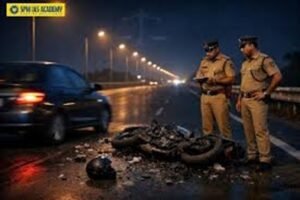
In recent years, the number of road accidents in Wayanad has been increasing steadily. Hundreds of accidents are reported annually, resulting in injuries and loss of lives. A large number of victims are young people and daily commuters.
The rise in tourism has also contributed to increased traffic, especially during peak seasons. Many drivers who are unfamiliar with hilly terrain find it difficult to navigate the roads, which further increases accident risks. The growing number of vehicles combined with inadequate infrastructure makes the situation more serious.
- Major Road Safety Issues
3.1 Poor Road Infrastructure
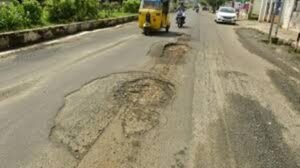
One of the main causes of accidents in Wayanad is poor road conditions. Many roads are:
- Narrow and not suitable for heavy traffic
- Filled with potholes and cracks
- Poorly maintained, especially in rural areas
During the rainy season, roads become even more damaged due to waterlogging and soil erosion. This creates dangerous driving conditions for all types of vehicles.
3.2 Lack of Proper Signage and Safety Measures
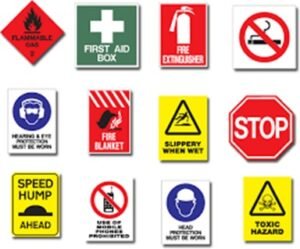
Proper road signs and safety features are essential, especially in hilly regions. However, in many parts of Wayanad:
- Warning signs for sharp curves are missing
- Guardrails are not installed on dangerous slopes
- Road markings are faded or unclear
Without these safety measures, drivers may not be aware of upcoming dangers, leading to accidents.
3.3 Traffic Management Problems
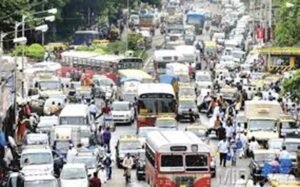
Traffic control systems in Wayanad are not well developed in all areas. Some common issues include:
- Lack of traffic signals at busy junctions
- Insufficient traffic police presence
- Unorganized parking along roads
These problems often lead to traffic congestion and confusion, increasing the chances of collisions.
3.4 Reckless and Negligent Driving
Human error is one of the biggest contributors to road accidents. Many drivers in Wayanad:
- Drive at high speeds on narrow and curved roads
- Use mobile phones while driving
- Drive under the influence of alcohol
- Ignore traffic rules
Such irresponsible behaviour significantly increases the risk of accidents.
3.5 Increase in Two-Wheeler Accidents
Two-wheelers are widely used in Wayanad due to convenience and affordability. However, they are also more vulnerable:
- Many riders do not wear helmets
- Young riders often engage in risky driving
- Lack of protection leads to serious injuries
As a result, a large proportion of accidents involve motorcycles and scooters.
3.6 Geographical Challenges
Wayanad’s hilly terrain itself is a major challenge:
- Roads have steep slopes and sharp turns
- Ghat sections are narrow and difficult to navigate
- Landslides may occur during heavy rains
These natural conditions make driving more dangerous compared to flat regions.
3.7 Weather Conditions
Weather plays a crucial role in road safety:
- Heavy rainfall makes roads slippery
- Fog reduces visibility, especially in the early morning and at night
- Water accumulation damages road surfaces
Drivers often find it difficult to control vehicles under such conditions.
3.8 Lack of Awareness Among Road Users
Many road users are not fully aware of traffic rules and safety practices:
- Pedestrians cross roads carelessly
- Drivers ignore signals and speed limits
- Safety measures like seat belts are often neglected
This lack of awareness contributes significantly to accidents.
- Accident-Prone Areas (Black Spots)

Certain locations in Wayanad are known for frequent accidents. These are called “black spots”. They are usually found in:
- Sharp bends in ghat roads
- Busy intersections without proper control
- Roads with poor visibility or damaged surfaces
Identifying and improving these areas is essential for reducing accidents.
- Impact of Road Safety Issues
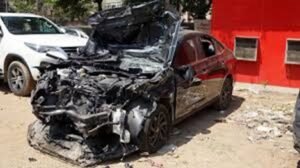
5.1 Loss of Life and Injuries
Road accidents lead to deaths and serious injuries, affecting families and communities. Many victims suffer permanent disabilities.
5.2 Economic Loss
Accidents result in financial losses due to medical expenses, vehicle damage, and loss of income.
5.3 Social Impact
Families experience emotional trauma and stress. Society also bears the burden of healthcare and rehabilitation.
- Measures to Improve Road Safety
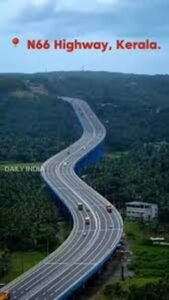
6.1 Improvement of Infrastructure
- Repair damaged roads and fill potholes
- Widen narrow roads
- Install guardrails and proper lighting
6.2 Better Traffic Management
- Install traffic signals at important junctions
- Increase the number of traffic police
- Regulate parking
6.3 Strict Enforcement of Rules
- Penalize overspeeding and drunk driving
- Ensure helmet and seat belt use
- Conduct regular vehicle checks
6.4 Awareness and Education
- Organize road safety campaigns
- Educate students and drivers
- Promote safe driving habits
6.5 Use of Technology
- Install CCTV cameras
- Use speed detection systems
- Implement smart traffic management
6.6 Special Measures for Hilly Areas
- Place warning signs at curves
- Improve road safety
- Monitor landslide-prone areas
- Conclusion
Road safety in Wayanad district is a serious issue that requires immediate and continuous efforts. While natural conditions cannot be changed, proper planning, infrastructure development, and responsible behaviour can significantly reduce accidents.
It is the responsibility of both the government and the public to ensure safer roads. By following traffic rules, improving awareness, and maintaining roads properly, Wayanad can become a safer place for residents and visitors alike.

