
Wayanad district is one of the most ecologically rich regions in Kerala, forming part of the Western Ghats. It is known for its dense forests, wildlife sanctuaries, and biodiversity. Forests play a crucial role in maintaining ecological balance, supporting wildlife, and providing livelihood to local communities.
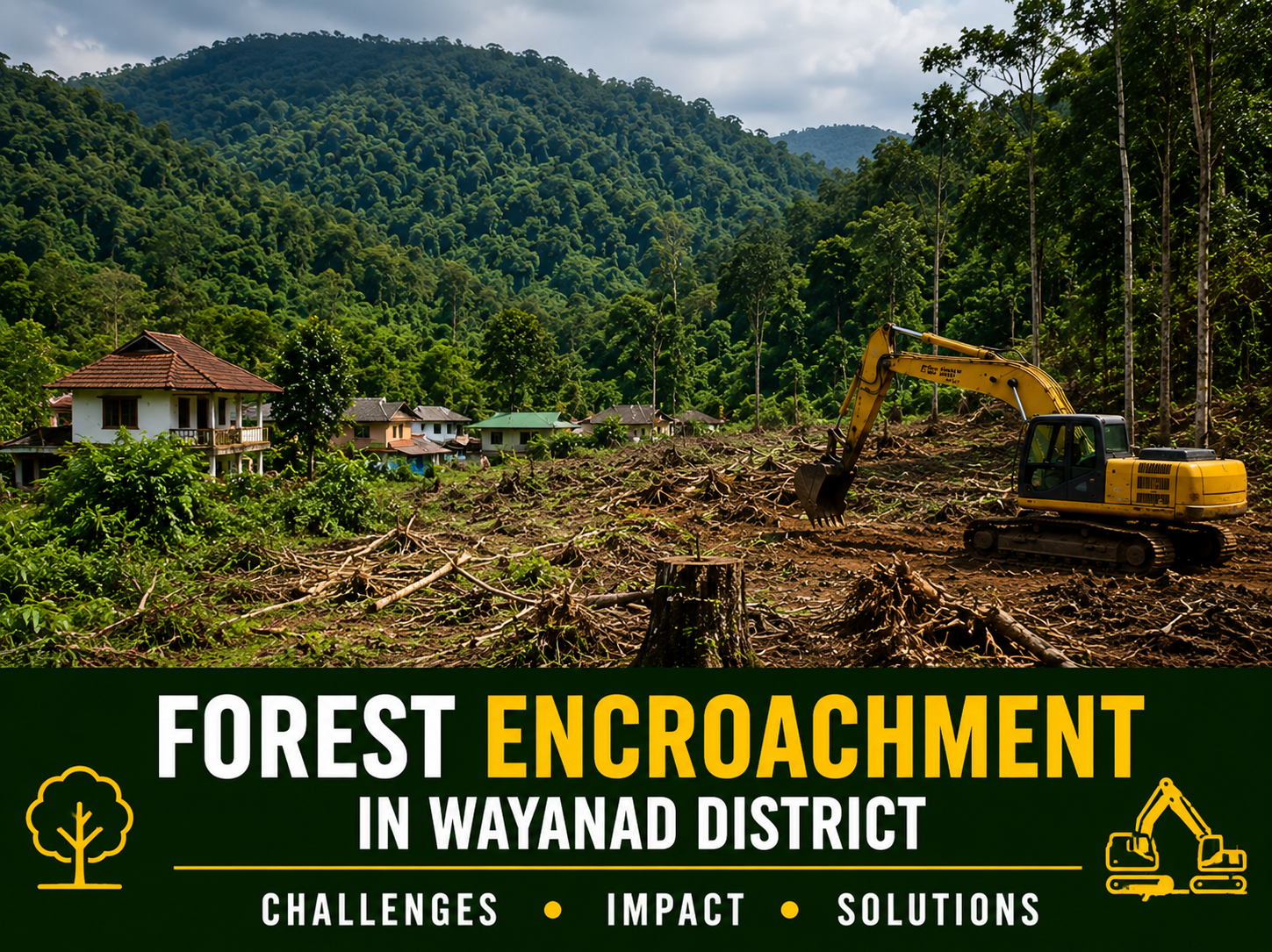
However, over the years, Wayanad has been facing serious environmental issues, one of the most important being forest encroachment. This refers to the illegal or unauthorized occupation and use of forest land for agriculture, settlements, plantations, or commercial purposes.
- Extent of Forest Encroachment
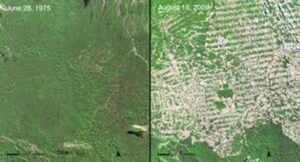
Forest encroachment has significantly reduced forest cover in Wayanad:
- Studies show that nearly 62% of forest cover has been lost between 1950 and 2018 due to land conversion
- Large areas of forest have been converted into plantations such as tea, coffee, and rubber
- Around 1700+ hectares of forest land remain encroached in the district
This shows that forest encroachment is not a minor issue but a large-scale environmental problem.
- Causes of Forest Encroachment
3.1 Expansion of Agriculture and Plantations
One of the main reasons for encroachment is the expansion of agriculture:
- Forest lands are cleared for crops like coffee, pepper, and rubber
- Plantation activities have increased rapidly over the decades
- Commercial farming has replaced natural forests
Research shows that natural forests were gradually replaced by plantations and agricultural land in Wayanad .
3.2 Population Pressure and Settlements
Increasing population has led to:
- Expansion of human settlements into forest areas
- Land occupation for housing and livelihood
- Migration of people into forest regions
Some encroachments are linked to land struggles and settlement demands, especially among marginalized communities.
3.3 Tourism and Development Activities
Wayanad is a popular tourist destination, which has led to:
- Construction of resorts and hotels in forest areas
- Road development cutting through forests
- Unregulated tourism infrastructure
Such activities often result in deforestation and encroachment.
3.4 Illegal Activities
Certain illegal practices also contribute:
- Unauthorized land grabbing
- Illegal bamboo and forest resource extraction
- Expansion of private property boundaries into forest land
These activities weaken forest protection systems.
3.5 Government Policies and Land Use Changes
Historical policies also played a role:
- Forest lands were diverted for development projects
- Industrial needs (like raw materials) led to deforestation
- Weak enforcement of forest laws allowed encroachment
- Environmental Impacts of Forest Encroachment
4.1 Loss of Biodiversity
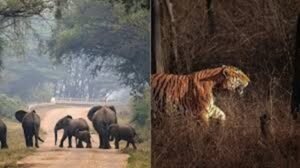
Wayanad is home to many species of plants and animals. Encroachment leads to:
- Destruction of natural habitats
- Threat to endangered species
- Reduction in biodiversity
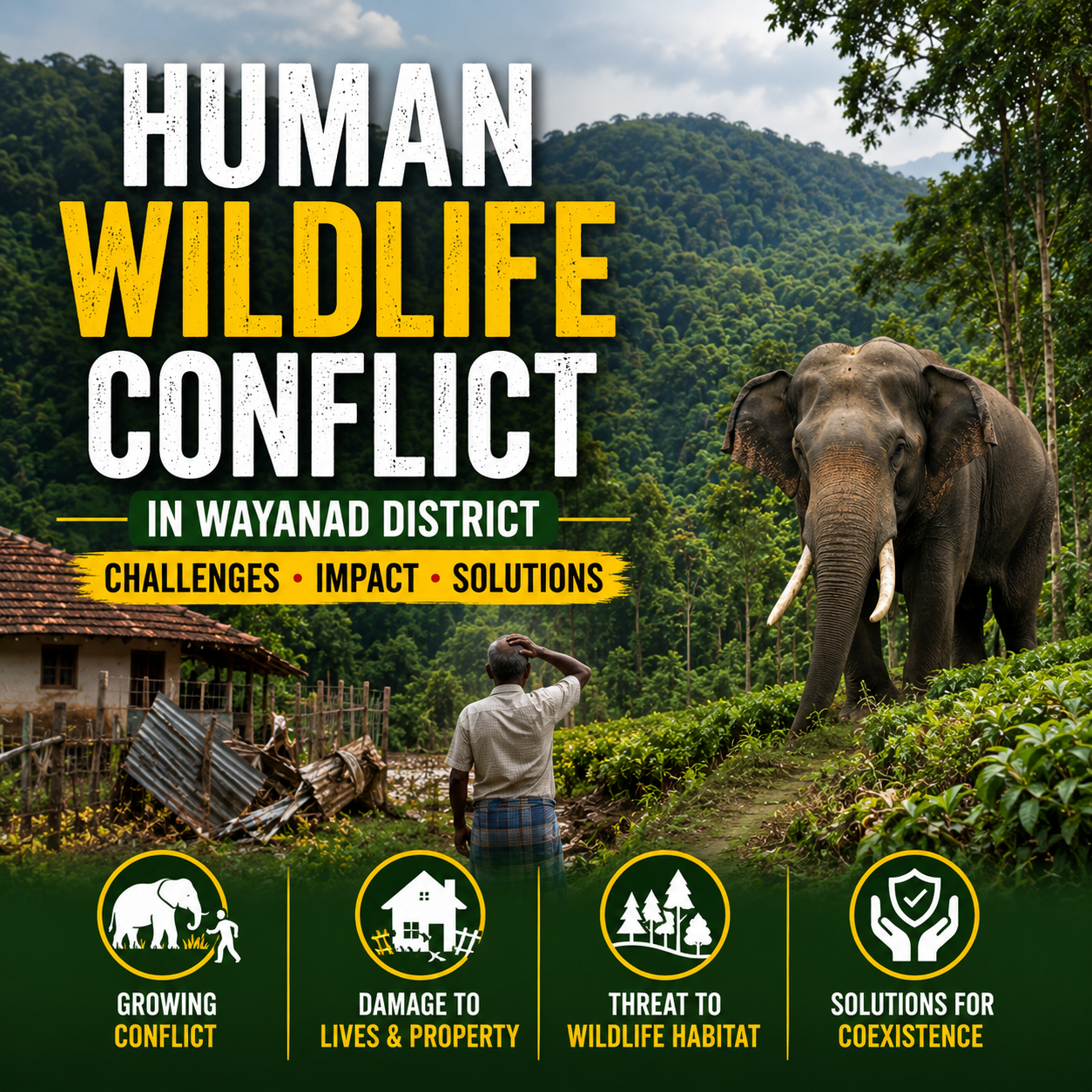
4.2 Human–Wildlife Conflict
When forests are reduced:
- Animals lose their natural habitat
- Wildlife enters human settlements in search of food
- Conflicts between humans and animals increase
Encroachment has been linked to increased human–animal conflict in Wayanad .
4.3 Increase in Diseases
Forest degradation has indirect health impacts:
- Spread of diseases like dengue and Kyasanur Forest Disease (KFD)
- Increased human exposure to disease-carrying organisms
Studies show a link between forest encroachment and disease outbreaks in the region .
4.4 Soil Erosion and Landslides
Forests help hold soil together. When they are removed:
- Soil becomes loose and unstable
- Risk of landslides increases, especially during heavy rain
- Water retention capacity decreases
Environmental reports have linked deforestation and land-use changes to landslide risks in Wayanad.
4.5 Climate Change and Environmental Degradation
Encroachment leads to:
- Increase in temperature
- Reduction in rainfall stability
- Disturbance of ecological balance
Forests act as carbon sinks, and their loss contributes to climate change.
- Social and Economic Impacts
5.1 Impact on Tribal Communities
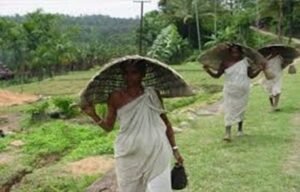
Wayanad has a significant tribal population:
- Forest-dependent livelihoods are affected
- Traditional ways of life are disrupted
- Tribal communities become more vulnerable
5.2 Economic Benefits vs Environmental Loss
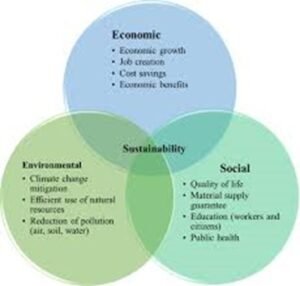
While encroachment may provide:
- Agricultural income
- Tourism revenue
It also causes long-term losses such as:
- Environmental damage
- Disaster risks
- Loss of natural resources
- Government Actions and Challenges

6.1 Measures Taken
Authorities have taken steps like:
- Forest protection laws
- Eviction of illegal encroachments
- Monitoring through satellite and GPS
6.2 Challenges
However, controlling encroachment is difficult due to:
- Social and political pressures
- Land rights issues
- Resistance from settlers
- Lack of strict enforcement
Encroachments often continue due to these challenges.
- Solutions and Preventive Measures
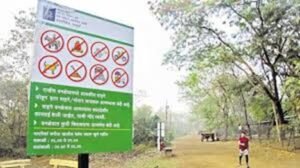
7.1 Strict Enforcement of Laws
- Strengthen forest protection policies
- Take legal action against illegal encroachers
7.2 Sustainable Land Use
- Promote eco-friendly agriculture
- Prevent unnecessary land conversion
7.3 Community Participation
- Involve local communities in forest conservation
- Provide alternative livelihoods
7.4 Regulating Tourism
- Control construction in eco-sensitive areas
- Promote responsible tourism
7.5 Afforestation and Conservation
- Plant trees in degraded areas
- Protect existing forests
- Conclusion
Forest encroachment in Wayanad district is a serious environmental issue that threatens biodiversity, human life, and ecological balance. While development and livelihood needs are important, they must be balanced with environmental protection.
Protecting forests is not just the responsibility of the government—it requires active participation from society as a whole. Sustainable practices, awareness, and strict enforcement can help preserve Wayanad’s rich natural heritage for future generations.