
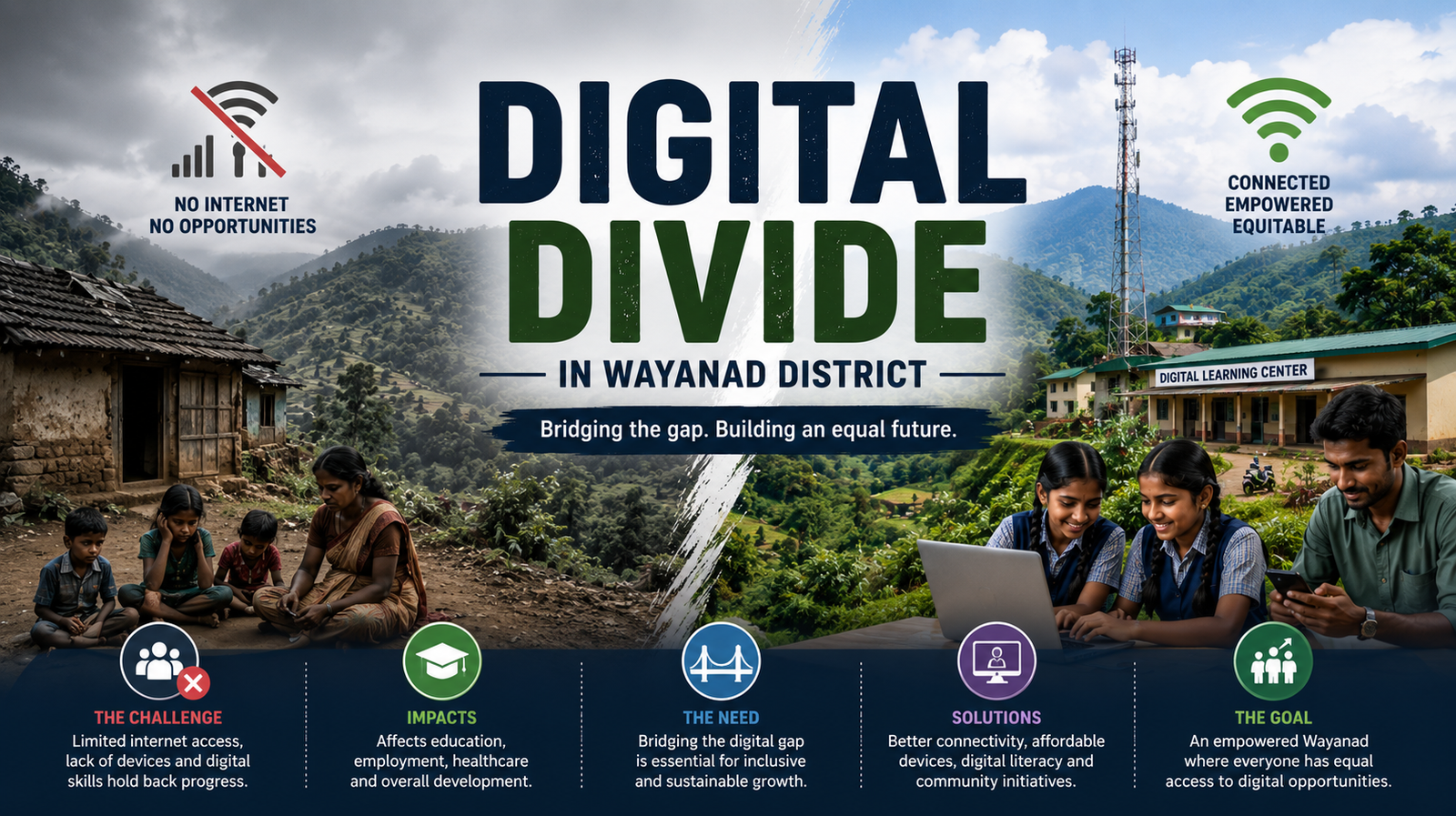
The term ‘digital divide’ refers to the gap between people who have easy access to digital technologies (such as the internet, smartphones, and computers) and those who do not. In today’s world, digital access is essential for education, employment, healthcare, communication, and government services.
The Wayanad district in Kerala, despite being part of a highly literate state, still faces a significant digital divide, especially among tribal communities, rural populations, and economically weaker sections. This divide became more visible during the COVID-19 pandemic when online education and digital services became necessary.
The digital divide in Wayanad is not only about technology but also about economic inequality, geography, infrastructure, and awareness.
- Meaning of Digital Divide
The digital divide can be understood on three levels:
2.1 Access Divide
- Lack of devices like smartphones, laptops, or computers
- Poor internet connectivity in remote areas
2.2 Usage Divide
- Some people have devices but lack digital skills
- Difficulty in using online services
2.3 Quality Divide
- Unequal quality of internet speed and digital services
- Limited access to advanced digital tools
👉 In Wayanad, all three levels of digital divide exist, especially in rural and tribal regions.
- Causes of Digital Divide in Wayanad
3.1 Geographic Barriers
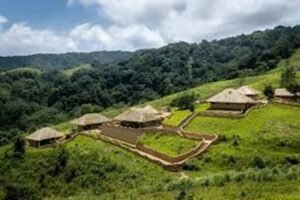
- Wayanad is a hilly district with forests and remote villages
- Network connectivity is weak in many areas
- Mobile towers and broadband services are limited
3.2 Economic Inequality
- Many families have low income
- Smartphones, laptops, and internet plans are expensive for some households
- Daily wage workers prioritize basic needs over digital devices
3.3 Lack of Infrastructure
- Limited internet infrastructure in tribal settlements
- Inadequate electricity supply in some remote areas
- Poor maintenance of digital networks
3.4 Low Digital Literacy
- Many people are not trained in using digital tools
- The elderly population faces difficulties in adapting to technology
- Lack of awareness about online services
3.5 Language Barriers
- Most digital content is in English or Malayalam
- Tribal languages are not supported in digital platforms
- Impact of Digital Divide
4.1 Education Sector
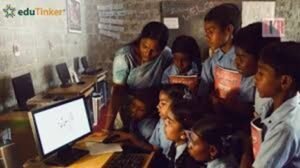
- Students in remote areas struggle with online learning
- A lack of smartphones leads to missed classes
- During COVID-19, many students depended on shared devices
👉 This created educational inequality.
4.2 Healthcare Access
- Telemedicine services are difficult to access
- Lack of awareness about online health services
- Difficulty in booking appointments digitally
4.3 Employment Opportunities
- Many jobs require digital skills
- Rural youth miss online job opportunities
- Limited access to skill development platforms
4.4 Government Services
- Many welfare schemes are now online
- People in remote areas struggle to access digital services
- Lack of Aadhaar updates, online applications, etc.
4.5 Social Exclusion
- People without internet are excluded from digital society
- Reduced access to information and communication
- Widening gap between urban and rural populations
- Digital Divide Among Tribal Communities
Wayanad has a large tribal population, and the digital divide is more severe in these communities.
Key issues:
- Very limited access to smartphones or internet
- Remote forest settlements lack connectivity
- Low digital literacy levels
Impact:
- Students struggle with online education
- Limited access to government schemes
- Social and economic isolation
👉 Tribal communities are among the most affected groups in the digital divide.
- Government Initiatives
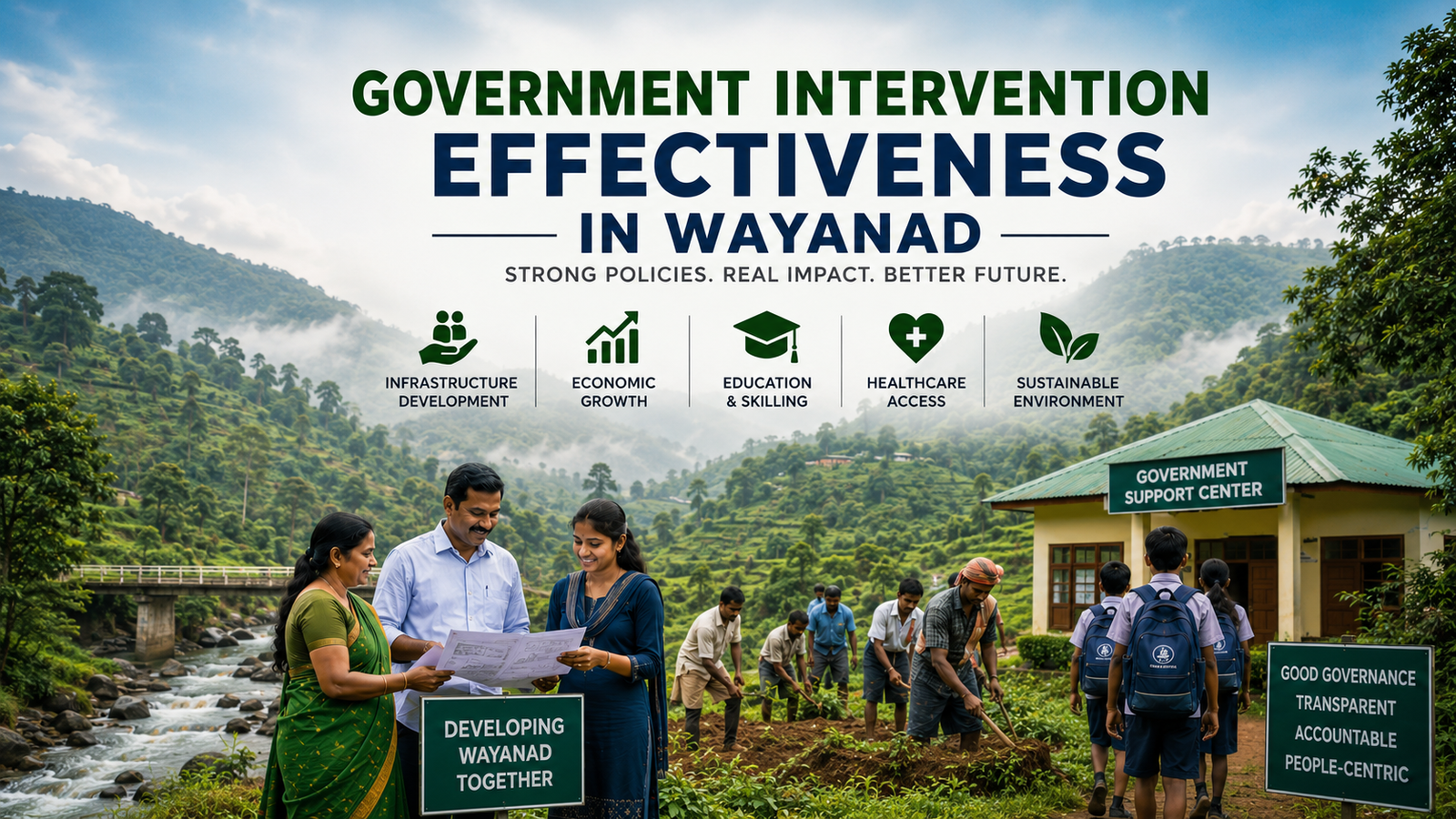
The government has taken steps to reduce the digital gap:
6.1 Kerala Fibre Optic Network (K-FON)
- Provides affordable internet connectivity
- Aims to connect rural households
6.2 Digital Education Programs
- Online learning platforms for students
- Smart classroom initiatives in schools
6.3 Common Service Centres (CSC)
- Help citizens access online government services
- Assist in document applications
6.4 e-Governance Services
- Online application for welfare schemes
- Digital delivery of services
👉 These initiatives are improving access, but challenges remain in remote areas.
- Role of NGOs and Local Communities
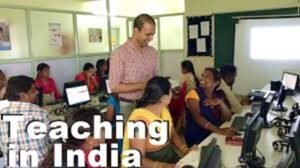
NGOs and local organisations play an important role in reducing the digital divide.
Activities include:
- Digital literacy training programs
- Providing smartphones or learning devices
- Awareness campaigns on internet usage
- Supporting students in online education
👉 Community participation helps bridge the gap at the grassroots level.
- Challenges in Reducing Digital Divide

8.1 Infrastructure Gaps
- Slow expansion of internet networks in hilly regions
8.2 Financial Limitations
- High cost of devices and data plans
8.3 Awareness Issues
- Lack of interest or confidence in using digital tools
8.4 Maintenance Problems
- Technical issues in remote areas take time to fix
- Effects of COVID-19 on Digital Divide
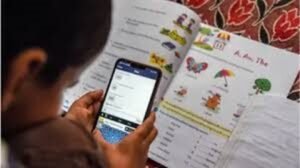
The COVID-19 pandemic highlighted the digital divide in Wayanad:
- Schools shifted to online classes
- Many students could not attend classes due to a lack of devices
- Teachers and students faced connectivity issues
- Rural families shared a single smartphone
👉 The pandemic made digital inequality more visible than ever.
- Key Issues Summary
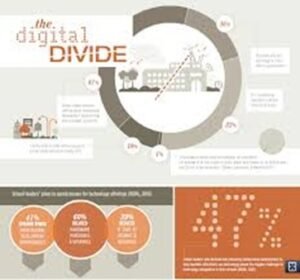
Major problems of the digital divide in Wayanad include the following:
- Poor internet connectivity in rural areas
- Lack of digital devices
- Low digital literacy
- Educational inequality
- Limited access to government services
- Tribal community exclusion
- Economic constraints
- Suggestions for Improvement
11.1 Improve Infrastructure
- Expand high-speed internet to remote areas
- Install more mobile towers
11.2 Reduce Cost Barriers
- Provide affordable devices and internet plans
- Subsidies for low-income families
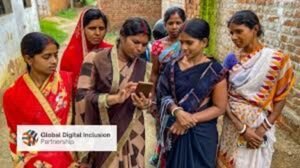
11.3 Digital Literacy Programs
- Training in schools and communities
- Special programs for tribal populations
11.4 Strengthen Government Services
- Offline support centers alongside digital systems
- Better CSC network expansion
11.5 Focus on Tribal Areas
- Special connectivity projects in forest regions
- Education support for tribal children
- Conclusion
The digital divide in the Wayanad district is a major challenge that affects education, healthcare, employment, and social equality. While Kerala has made significant progress in digital development, remote and tribal areas of Wayanad still face barriers in accessing technology.
Bridging this divide requires a combined effort from the government, NGOs, the private sector, and local communities. Ensuring equal digital access will help Wayanad move towards inclusive and sustainable development, where no one is left behind in the digital age.