
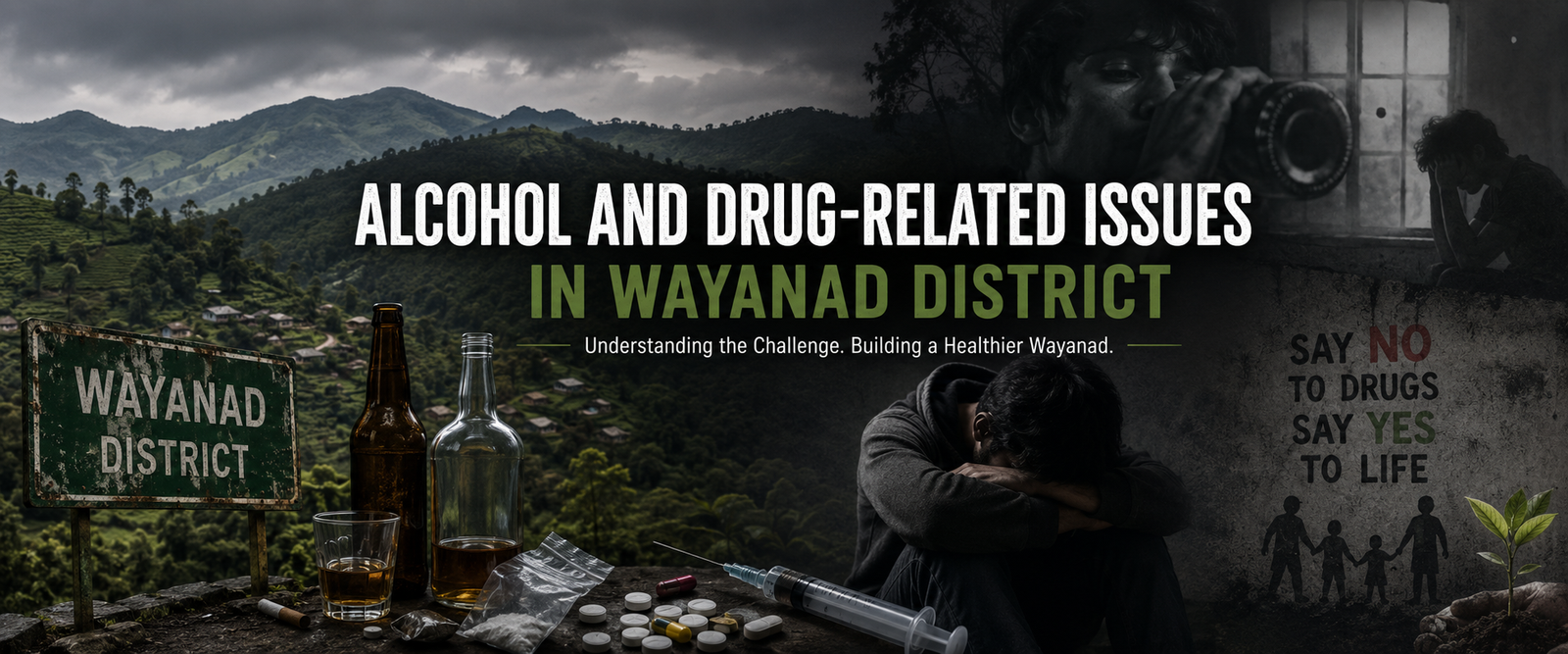
Wayanad district is a hilly district in the northeastern part of Kerala, known for its rich biodiversity, tribal population, and agricultural economy. Despite its natural beauty and cultural heritage, Wayanad faces significant social challenges, particularly related to alcohol consumption and drug abuse.
Substance abuse has emerged as a major public health and social issue in the district, affecting individuals, families, and communities—especially among marginalized tribal populations.
- Prevalence of Alcohol and Substance Use

2.1 Alcohol Consumption Patterns
Studies indicate that alcohol consumption is relatively high among tribal communities in Wayanad. A large household survey found that:
- Around 17.2% of individuals reported current alcohol use
- Male gender is a strong predictor of alcohol consumption
- Substance use increases with age and employment status
Alcohol use is often seen as a male-dominated activity, but changing social patterns show increasing involvement of younger men.
2.2 Substance Use Beyond Alcohol
In addition to alcohol, other substances include:
- Tobacco (smoking prevalence ~18.8%)
- Betel quid chewing (~47.6%)
- Narcotic drugs such as cannabis, MDMA, and synthetic drugs
Recent enforcement actions in Kerala (including Wayanad) have uncovered:
- Cannabis cultivation
- Synthetic drug trafficking
- Increasing narcotics cases and seizures
This indicates that drug abuse is not limited to alcohol, but is part of a broader substance abuse problem.
- Causes of Alcohol and Drug Abuse

3.1 Socio-Cultural Factors
Alcohol consumption in Wayanad, especially among tribal communities, is often linked to:
- Traditional rituals and celebrations
- Cultural acceptance of drinking
- Family patterns (e.g., fathers and sons drinking together)
Research shows that many individuals start drinking at a young age due to:
- Parental influence
- Peer pressure
- Home environment
3.2 Economic and Occupational Factors
- Daily wage laborers often spend earnings on alcohol
- Financial stress and poverty contribute to substance dependence
- Exploitation by landlords and lack of savings habits increase vulnerability
3.3 Lack of Education and Awareness
- Low literacy levels in tribal communities contribute to higher substance use
- Limited awareness about health risks and addiction
- Lack of access to counseling and rehabilitation services
3.4 Availability of Alcohol and Drugs
- Easy availability of liquor through legal outlets
- Illegal liquor production and smuggling
- Growth of drug networks, especially targeting youth
Concerns have been raised about increasing liquor outlets and drug circulation in Kerala, which indirectly affects districts like Wayanad
3.5 Youth Vulnerability
- Increasing involvement of school and college students in drug use
- Peer influence and curiosity
- Drug trafficking networks targeting young people
There are warnings that educational institutions are becoming potential hotspots for drug activity
- Impact of Alcohol and Drug Abuse

4.1 Health Consequences
Alcohol and drug abuse lead to:
- Liver diseases and chronic illnesses
- Mental health disorders (depression, anxiety)
- Addiction and dependence
Substance abuse significantly reduces quality of life, affecting physical, emotional, and social well-being
4.2 Family and Social Problems
Substance abuse has severe effects on families:
- Domestic violence
- Financial instability
- Neglect of children
- Breakdown of family relationships
Studies highlight that alcohol misuse creates a heavy burden on spouses and children
4.3 Crime and Violence
Alcohol and drugs are strongly linked to crime:
- Violent incidents and murders under intoxication
- Increased conflicts in tribal colonies
For example, reports show multiple murders in Wayanad linked to alcohol-induced violence
4.4 Economic Impact
- Loss of productivity
- Increased healthcare costs
- Cycle of poverty due to spending on alcohol
Many households suffer because income is diverted toward addiction rather than basic needs.
4.5 Impact on Youth and Future Generations
- Dropout from schools
- Reduced employment opportunities
- Increased risk of criminal involvement
Drug abuse among youth threatens the future workforce and social stability of the district.
- Emerging Drug Issues in Wayanad

In recent years, Wayanad has seen:
- Rise in synthetic drugs (MDMA, methamphetamine)
- Drug use in tourist areas and resorts
- Occasional busting of rave parties and illegal drug networks
Law enforcement agencies have intensified actions to control:
- Cannabis cultivation
- Drug trafficking routes
- Distribution networks
This indicates that Wayanad is gradually becoming part of a larger drug network affecting Kerala.
- Government and Community Responses
6.1 Law Enforcement Measures
- Excise department raids and surveillance
- Special operations against drug cultivation and trafficking
- Arrests and seizure of illegal substances
6.2 Awareness Campaigns
- Anti-alcohol campaigns
- School-level awareness programs
- Community outreach initiatives
6.3 De-addiction Programs
- Rehabilitation centers
- Counseling services
- Government programs targeting tribal populations
However, these efforts often face challenges such as:
- Social stigma
- Lack of accessibility
- Insufficient infrastructure
- Challenges in Addressing the Issue

Despite various interventions, several challenges persist:
- Deep-rooted cultural acceptance of alcohol
- Poverty and marginalization of tribal communities
- Increasing drug availability
- Weak monitoring in remote areas
- Lack of effective rehabilitation support
- Suggestions and Recommendations
To address alcohol and drug-related issues in Wayanad, the following measures are recommended:
8.1 Strengthening Awareness
- Conduct regular awareness campaigns in tribal areas
- Include substance abuse education in schools
8.2 Improving Healthcare Access
- Establish more de-addiction centers
- Provide mental health support
8.3 Community Participation
- Involve local leaders and tribal organizations
- Promote community-based monitoring
8.4 Strict Law Enforcement
- Control illegal liquor production
- Strengthen anti-drug operations
8.5 Socio-economic Development
- Improve education and employment opportunities
- Reduce poverty and exploitation
- Conclusion
Alcohol and drug abuse in Wayanad district is a multidimensional issue influenced by cultural, economic, and social factors. While alcohol misuse has long been prevalent—especially among tribal communities—the growing presence of narcotic drugs adds a new dimension to the problem.
Addressing this issue requires a holistic approach, combining:
- Awareness and education
- Strong law enforcement
- Community involvement
- Improved healthcare services
Only through coordinated efforts can Wayanad move toward a healthier and more sustainable future.