
1. Introduction — Wayanad’s Wildlife and Conservation Context
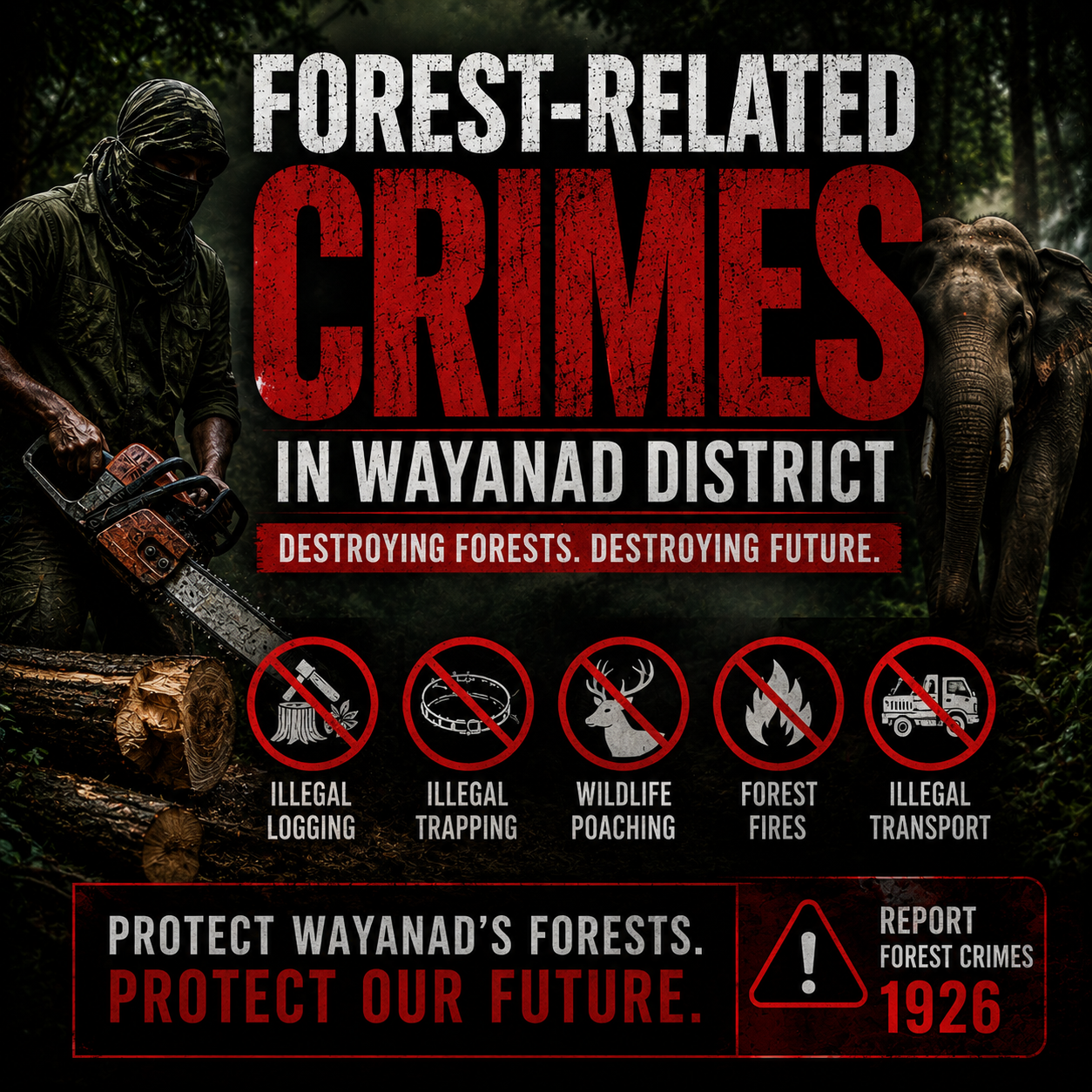
Wayanad district, located in the Western Ghats of northern Kerala, is known for its rich biodiversity and extensive forest cover. Much of its terrain is dense rainforest, a critical wildlife habitat, and part of sensitive ecological corridors. Wildlife areas here — including reserved forests and wildlife sanctuaries — provide sanctuary for species such as elephants, tigers, deer, leopards, Malabar giant squirrels, and a host of birds and reptiles.
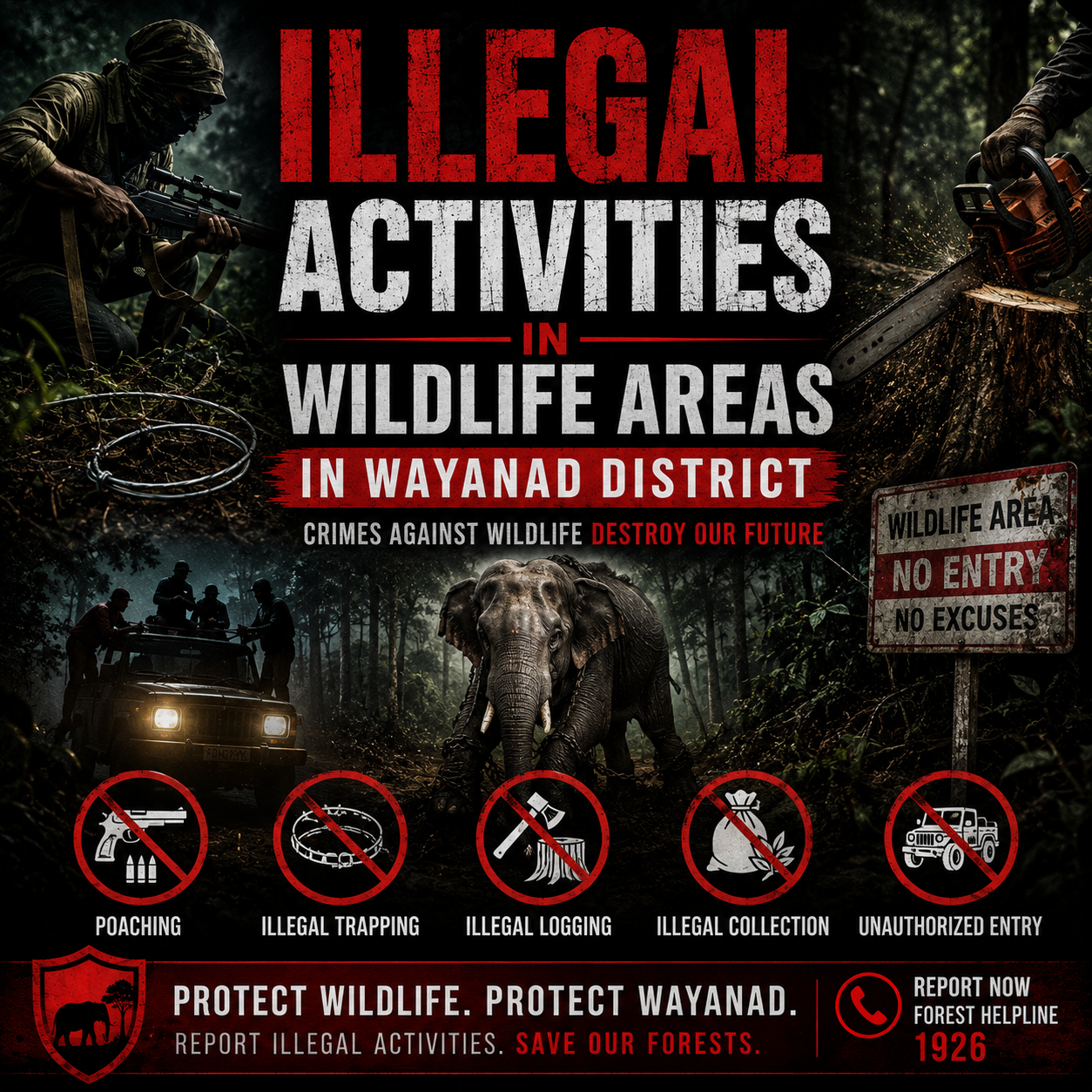
However, these thriving ecosystems also face pressures from illegal activities that undermine conservation efforts, disrupt wildlife, and threaten ecological integrity. These activities range from unauthorised human entry and illegal hunting/poaching to habitat destruction, illegal extraction of forest resources, and damage to anti‑poaching infrastructure.
- Unauthorised Entry and Disturbance of Wildlife Zones

One of the common illegal activities in Wayanad’s wildlife areas involves people entering restricted or sensitive forest zones without permission. In late 2025, the Forest Department registered a case against seven vloggers who entered a prohibited forest zone to film videos, allegedly removing steel wires placed as part of protective fencing intended to prevent wild animals from straying into neighbouring villages. This not only violated forest access laws but also disturbed natural wildlife movements and infrastructure.
Historically, unauthorised visitors have been arrested for entering the Wayanad Wildlife Sanctuary at night, consuming alcohol, and attempting to chase or tease wildlife — actions that disturb habitats and endanger both animals and humans.
Such breaches often occur because of tourism, social-media-driven exploration, or sheer lack of awareness regarding legal forest access protocols.
- Illegal Hunting and Poaching

3.1 Hunting of Wild Fauna
Illegal hunting — including poaching of wild animals for meat or trade — remains one of the gravest wildlife crime threats in Wayanad. In February 2026, forest officials arrested two members of a hunting gang in the Beenachi Estate forest area, recovering a country‑made rifle, ammunition, and the carcass of a porcupine during the operation.
Separately, in January 2026, three men were arrested for illegal hunting with guns at the Madur forest area; authorities alleged the suspects were also linked to meat trading after poaching.
Older reports from Wayanad attest that poaching gangs have been active in the region for years — for example, a gang was arrested around 2020 for illegal hunting in the Nanjarmoola forest without securing any wildlife but carrying weapons and ammunition inside protected zones.
3.2 Conflict Over Hunting of Protected Species
Sometimes, activities that stem from human–wildlife conflict blur legal lines. In October 2025, three local farmers were arrested for killing a Malabar giant squirrel, a native forest species, with a modified air gun while trying to protect crops. Their arrest sparked protests by farmer organisations, which argued that farmers only used low‑power guns to deter animals that damaged crops — underscoring tension between conservation laws and livelihood pressures.
Meanwhile, another incident saw four people arrested for hunting deer deep within forest areas using homemade firearms — a clear case of illegal wildlife exploitation.
These arrests illustrate that poaching and illegal hunting range from organised gangs to opportunistic or culturally framed activities, all of which threaten protected wildlife.
- Illegal Extraction of Forest Resources
Beyond wildlife hunting, illegal extraction and removal of forest products have emerged as a significant issue. A Times of India report highlighted longstanding concerns about illegal reed and bamboo harvesting along stream banks in Wayanad. Environmental groups allege that criminal networks from neighbouring districts have established operations to extract large quantities of reed bamboo — a critical species for preventing soil erosion and supporting stream ecology — often with the collusion of corrupt local officials.
Reed bamboo groves not only support biodiversity but also help stabilise riverbanks and reduce landslide risk. Their illegal removal, therefore, has broader ecological impacts beyond simple resource loss.
- Impact on Wildlife and Ecosystem Health

Illegal activities in wildlife zones have significant ecological and social consequences:
- Habitat disturbance: Unauthorised entry, removal of fencing, and human presence disrupt animal movement, breeding, and feeding patterns.
- Population threats: Poaching targets individual animals — even smaller species like squirrels — undermining population viability and forest food chains.
- Ecosystem imbalance: Removal of key forest products such as bamboo alters soil stability and stream dynamics, increasing erosion and biodiversity loss.
- Human–wildlife tensions: Hunting or perceived threats to crops can escalate human tensions against wildlife, hampering coexistence efforts.
Moreover, high human pressure on forest edges increases incidents of conflict — for instance, repeated elephant incursions into villages, which are often tied to habitat fragmentation and human encroachment near wildlife corridors.
- Law Enforcement and Legal Framework

The Wildlife Protection Act of India (1972) and related Kerala state forest laws strictly prohibit hunting of protected species, unauthorised entry into protected zones, and non‑permitted extraction of forest products. Violations can lead to imprisonment, fines, or both.
Forest officials in Wayanad actively conduct surveillance and arrests. The arrests of hunting gangs, rural hunters, and unauthorized visitors reflect enforcement action taken under these statutes. Remand to judicial custody for suspects and the filing of legal cases follow standard procedure after such arrests.
Community tensions — such as protest movements opposing arrests of farmers for killing a squirrel — underscore the need for nuanced enforcement that balances community livelihoods with conservation obligations.
- Underlying Causes and Socio‑Economic Drivers

Several factors contribute to illegal activities in Wayanad’s wildlife areas:
- Livelihood pressures: Farmers and residents close to forests sometimes resort to hunting or capturing wildlife perceived as crop pests or collect forest resources for income.
- Weak governance and corruption: Allegations of collusion between criminal groups and officials (e.g., illegal bamboo removal) highlight governance challenges.
- Tourism and media influence: People entering wildlife zones for filming or adventure tourism often ignore legal restrictions, increasing risks to wildlife and themselves.
- Human–wildlife conflict: Rising conflict incidents (e.g., elephants damaging crops) create pressure on communities, sometimes leading to retaliatory illegal actions.
- Challenges in Addressing Illegal Activities
Efforts to curb illegal activities face several challenges:
- Dense and inaccessible terrain: Wayanad’s rugged forests make surveillance difficult for enforcement agencies.
- Resource limitations: Forest staff often have limited manpower and technology for widespread monitoring.
- Community perceptions: Some local communities view certain wildlife laws as conflicting with livelihood needs, leading to friction with authorities.
- Overlap with human–wildlife conflict: Misinterpretation of wildlife protection law and human injury or crop damage can escalate tensions.
To overcome these challenges, strengthening community engagement, awareness campaigns, technology‑aided monitoring (e.g., camera traps, drones); and coordinated patrols are critical.
- Conclusion — Towards Improved Protection of Wildlife Areas
Illegal activities in Wayanad’s wildlife areas — such as hunting, unauthorised encroachment, and illicit extraction of forest resources — pose ongoing threats to biodiversity and ecological balance. While law enforcement agencies have taken significant action through arrests and legal proceedings, addressing the root socio‑economic drivers and strengthening community participation are equally important for sustainable wildlife protection.
Protecting Wayanad’s forests requires concerted enforcement, local cooperation, clear legal frameworks, and environmental education so that both wildlife and human communities can thrive in this ecologically vital landscape.