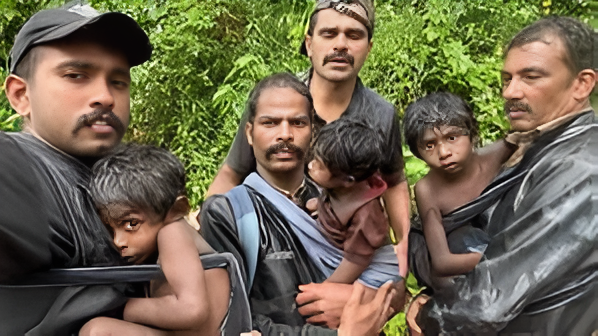

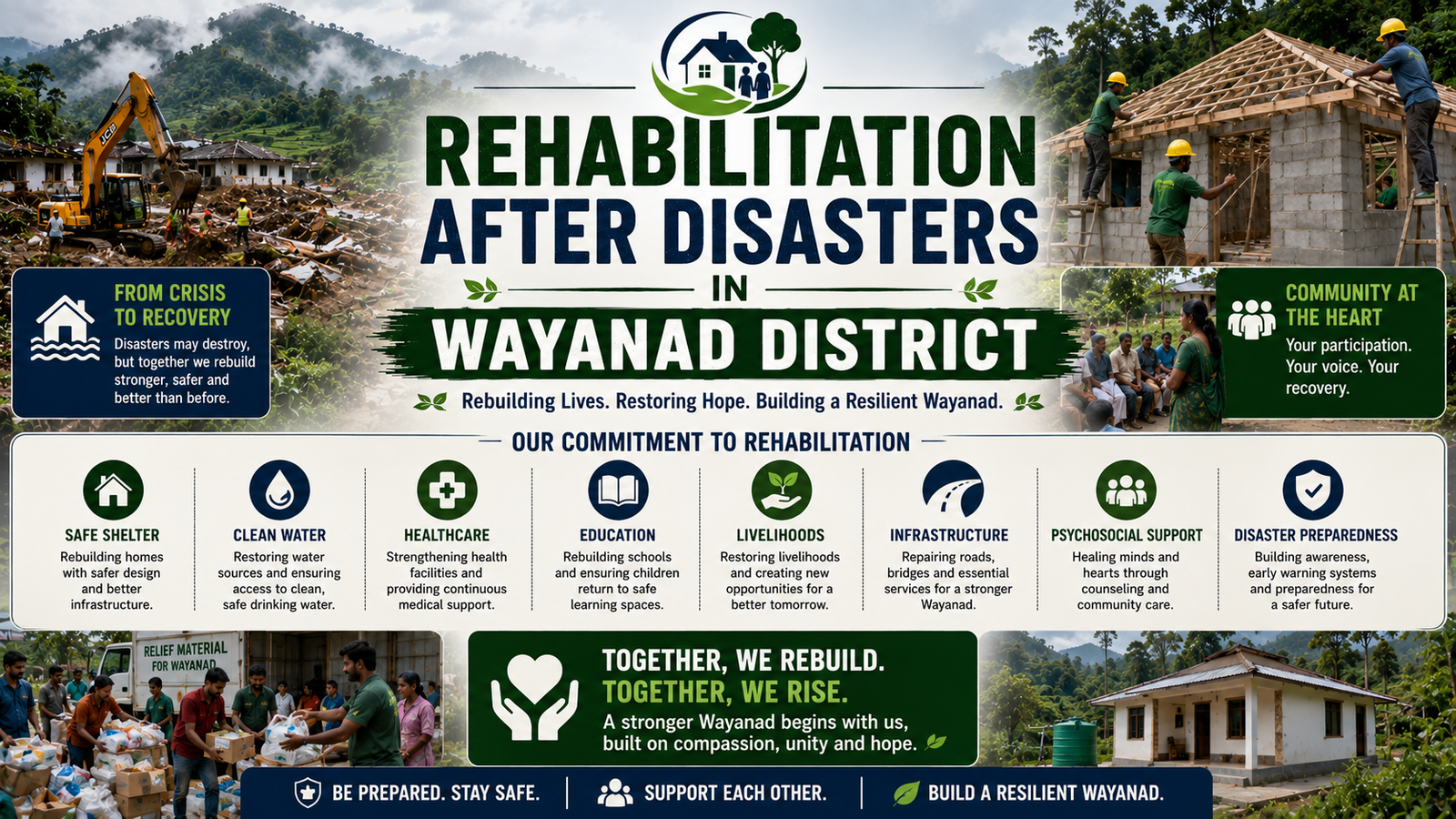
Wayanad district, located in the state of Kerala, is a hilly and ecologically sensitive region of the Western Ghats. The district is known for its forests, agriculture, and tourism. However, due to its fragile geography, steep slopes, and heavy rainfall, Wayanad is highly vulnerable to natural disasters such as landslides, floods, and soil erosion.
In recent years, disasters have caused significant loss of life, destruction of homes, damage to infrastructure, and disruption of livelihoods. As a result, rehabilitation after disasters has become a crucial part of disaster management in the district. Rehabilitation refers to the process of helping affected people recover, rebuild their lives, and restore normal conditions after a disaster.
- Major Types of Disasters in Wayanad
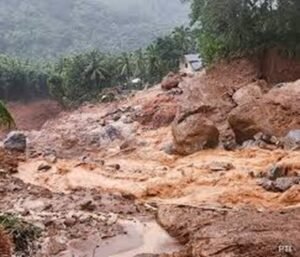
2.1 Landslides
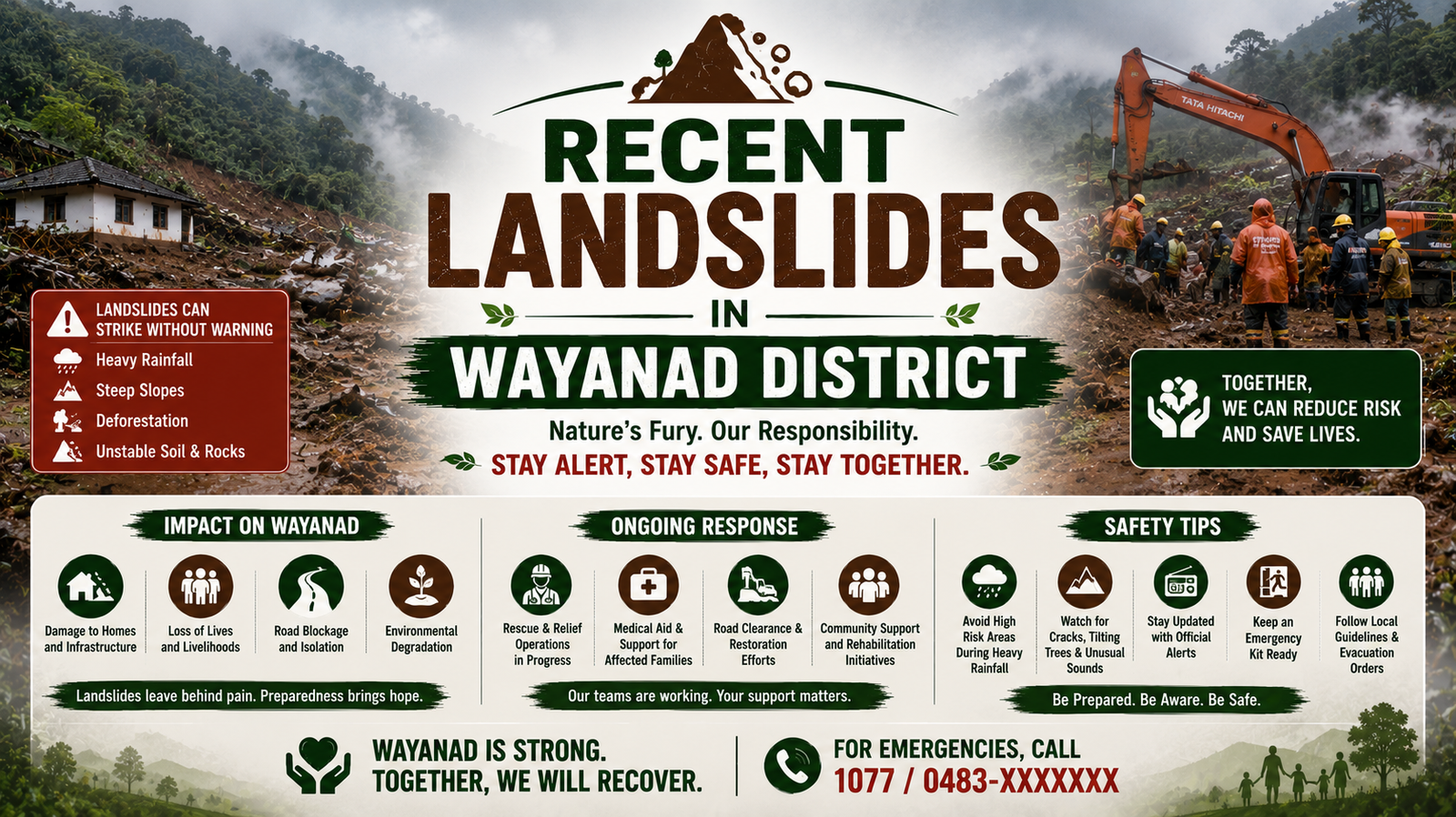
Wayanad frequently experiences landslides during heavy monsoon rains. Steep slopes, loose soil, and deforestation increase the risk. Landslides often destroy houses, roads, and plantations, making rehabilitation essential.
2.2 Floods
Heavy rainfall sometimes leads to flooding in low-lying areas. Rivers overflow, damaging agricultural land and settlements.
2.3 Soil Erosion
Continuous rainfall and removal of vegetation lead to soil erosion, reducing land stability and agricultural productivity.
2.4 Human–Wildlife Conflicts
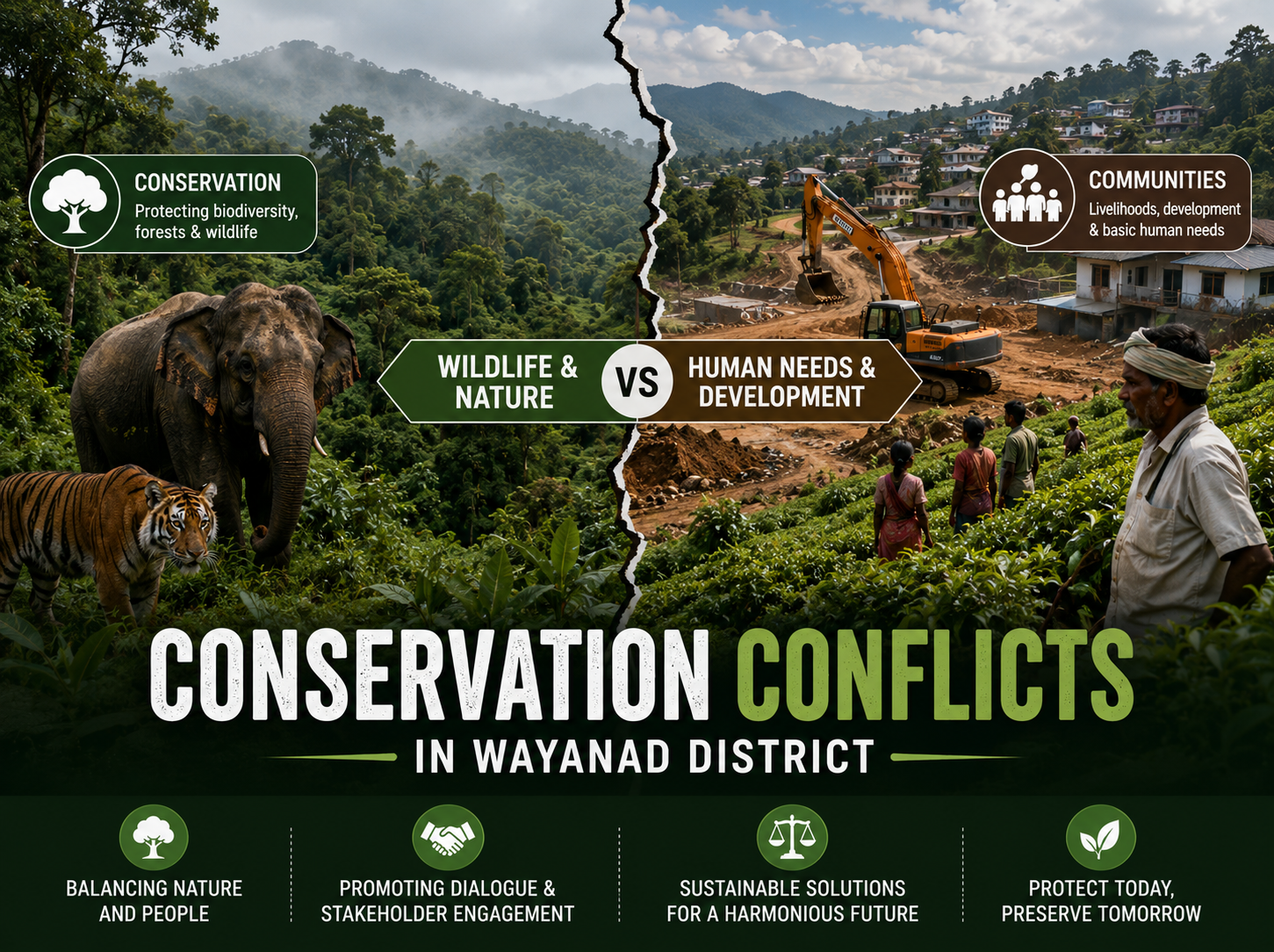
Though not a natural disaster, conflicts with wild animals can also cause destruction of crops and property, indirectly affecting livelihoods.
- Immediate Response After Disasters
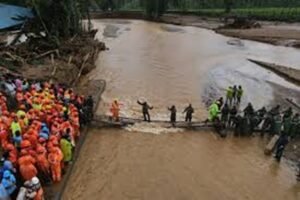
The first stage of rehabilitation begins with emergency response:
- Rescue operations by disaster management teams
- Evacuation of affected people to safe shelters
- Medical assistance for injured individuals
- Supply of food, drinking water, and essential materials
Agencies such as the State Disaster Management Authority and local administration play a key role in ensuring quick response.
- Short-Term Rehabilitation Measures
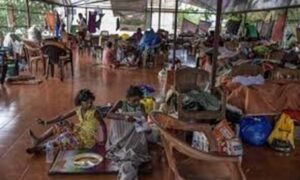
After immediate rescue operations, short-term rehabilitation begins:
4.1 Relief Camps
Displaced families are provided shelter in relief camps set up in schools, community halls, and public buildings.
4.2 Basic Needs Support
Government provides:
- Food kits
- Clothing
- Medicines
- Temporary accommodation
4.3 Financial Assistance
Families who lose homes or livelihoods are given compensation and emergency financial aid.
4.4 Restoration of Basic Services
Efforts are made to restore:
- Electricity
- Drinking water supply
- Road connectivity
- Long-Term Rehabilitation Measures
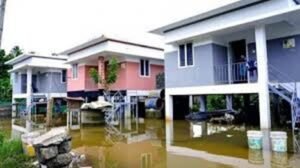
Long-term rehabilitation focuses on rebuilding lives and infrastructure.
5.1 Housing Reconstruction
One of the most important steps is rebuilding damaged houses. Government housing schemes are used to construct safer homes, often in less vulnerable locations.
5.2 Livelihood Restoration
Since agriculture is the main occupation in Wayanad, rehabilitation includes:
- Compensation for crop loss
- Distribution of seeds and farming tools
- Support for plantation recovery
5.3 Infrastructure Development
Damaged roads, bridges, and public facilities are rebuilt with improved safety standards.
5.4 Relocation Programs
In high-risk areas, families are sometimes relocated to safer zones to prevent future disasters.
- Government and Institutional Support
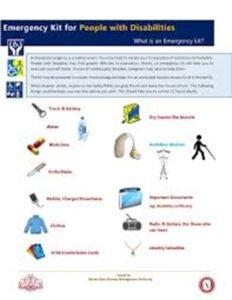
The government plays a major role in rehabilitation through various departments:
- Disaster Management Authority
- Revenue Department
- Forest Department
- Local self-government institutions
Support also comes from:
- Non-governmental organizations (NGOs)
- Volunteer groups
- Community-based organizations
Coordination between these agencies is essential for effective rehabilitation.
- Challenges in the Rehabilitation Process
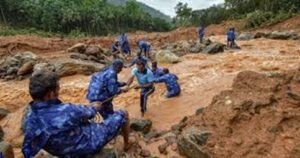
Despite efforts, rehabilitation in Wayanad faces several challenges:
7.1 Geographic Constraints
Steep terrain and remote areas make rescue and reconstruction difficult.
7.2 Repeated Disasters
Frequent landslides and floods delay long-term rehabilitation efforts.
7.3 Land Availability Issues
Finding safe land for relocation is a major challenge due to forest areas and private ownership.
7.4 Economic Limitations
Many families depend on agriculture, and recovery of income takes time.
7.5 Psychological Impact
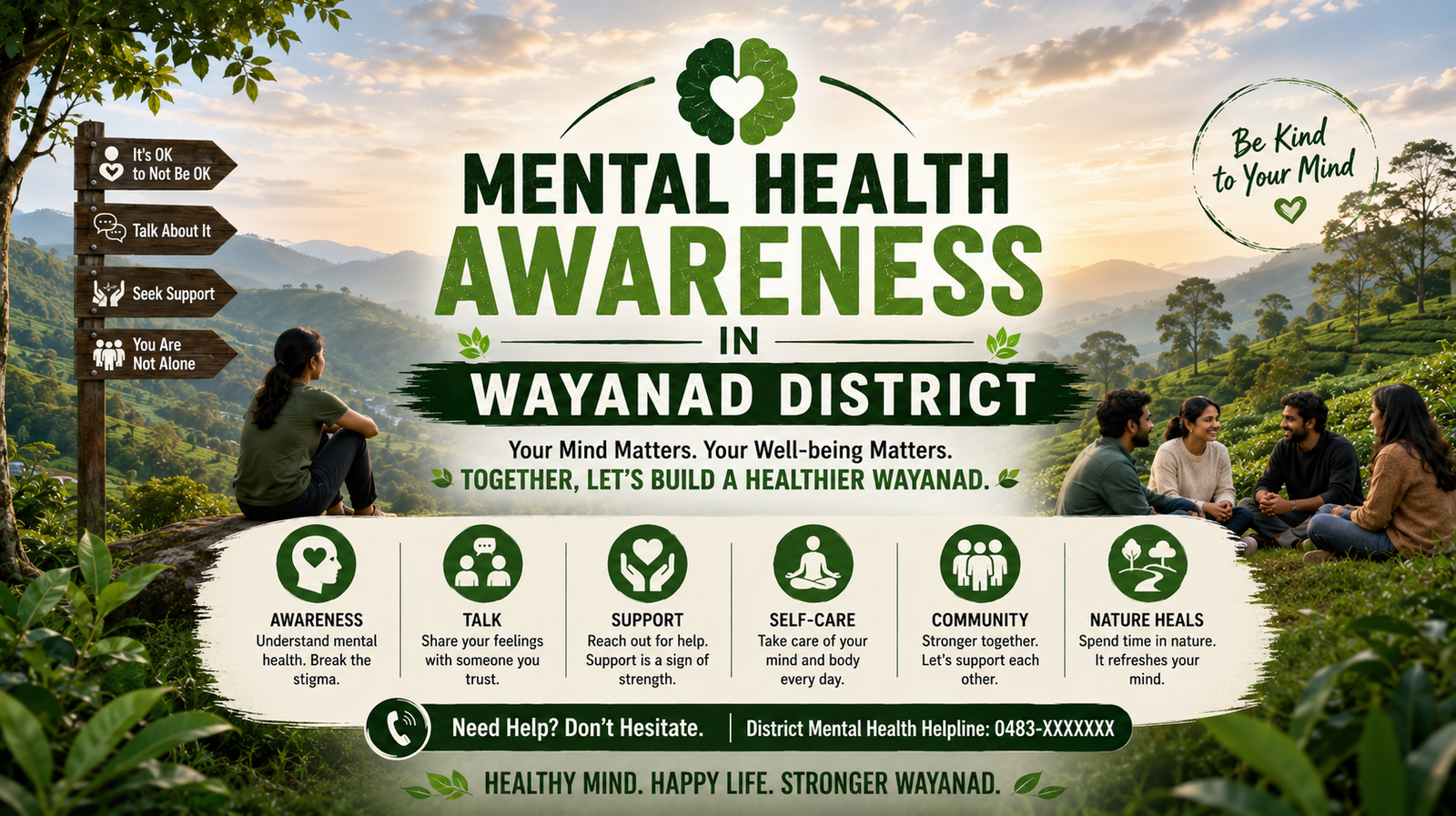
Disasters cause emotional trauma, and mental health support is often limited.
- Role of Community in Rehabilitation
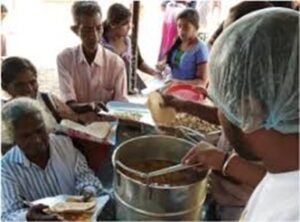
Local communities play an important role:
- Volunteers assist in rescue operations
- Community kitchens support affected families
- Local organizations help in rebuilding homes
- Social support helps victims recover emotionally
Community participation strengthens the overall rehabilitation process.
- Improvements and Future Strategies

To improve rehabilitation effectiveness, several measures are needed:
9.1 Better Disaster Planning
Proper land-use planning can reduce risk in vulnerable areas.
9.2 Early Warning Systems
Advanced weather monitoring can help predict disasters in advance.
9.3 Sustainable Development
Avoiding construction in ecologically sensitive zones is important.
9.4 Strengthening Infrastructure
Roads, bridges, and buildings should be designed to withstand natural disasters.
9.5 Awareness Programs
Educating people about disaster preparedness can reduce loss and improve response.
- Conclusion
Rehabilitation after disasters in Wayanad district is a complex but essential process. While the government and various organisations provide immediate relief and long-term support, challenges such as repeated disasters, difficult terrain, and resource limitations continue to affect recovery efforts.
A combination of strong governance, scientific planning, community participation, and sustainable development is necessary to ensure effective rehabilitation. Protecting human life and restoring livelihoods must remain the highest priority.