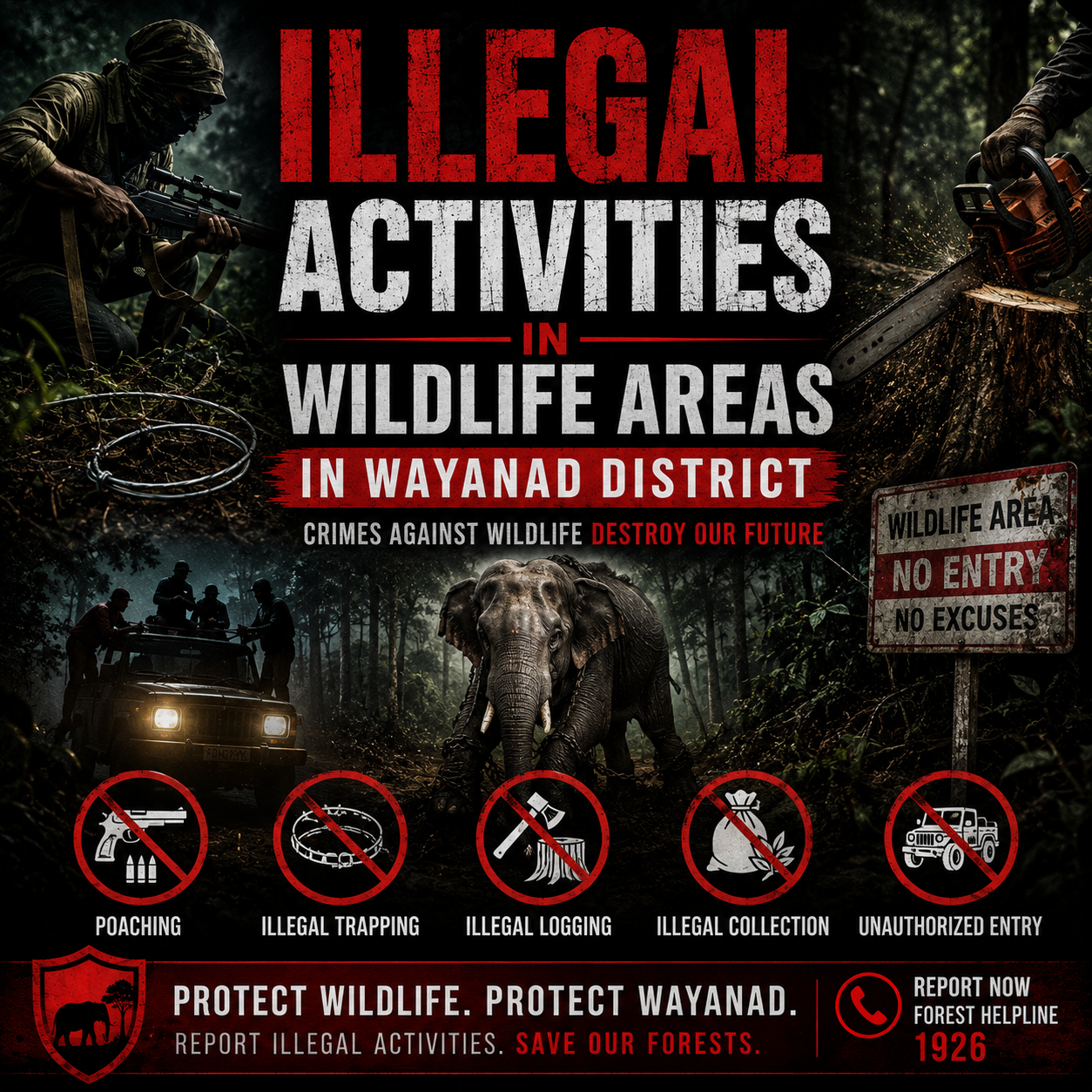

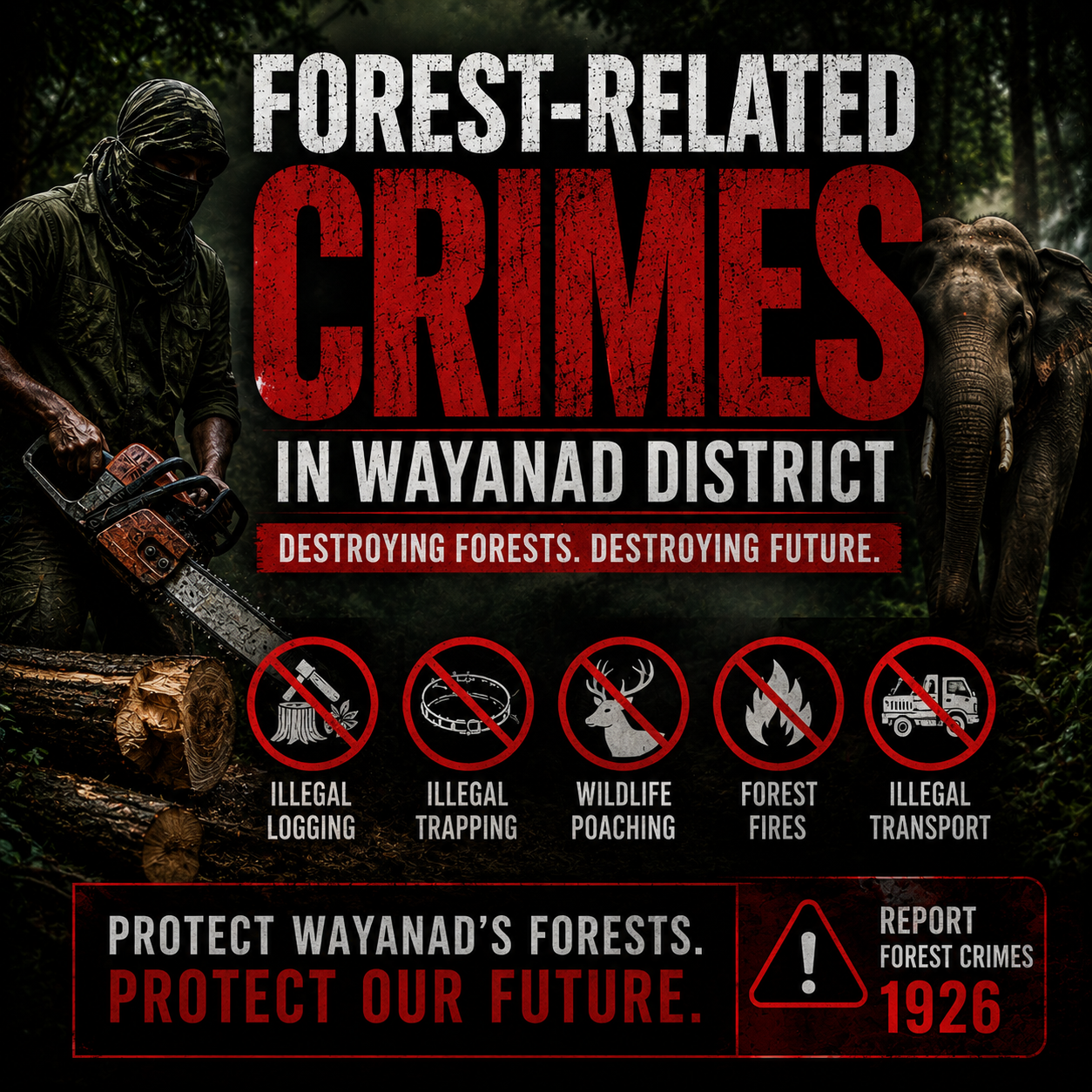
Wayanad district, located in the ecologically sensitive Western Ghats of Kerala, is known for its rich biodiversity, dense forests, and wildlife. It is home to several protected areas, tribal communities, and important ecosystems. However, in recent years, Wayanad has faced increasing threats from forest-related crimes.
These crimes include illegal activities such as poaching, illegal logging, forest encroachment, and exploitation of forest resources. Such actions not only harm the environment but also threaten wildlife, disrupt ecosystems, and affect the livelihoods of local communities.
________________________________________
2. Types of Forest-Related Crimes in Wayanad

2.1 Poaching and Illegal Hunting
Poaching is one of the most serious forest crimes in Wayanad.
• Forest officials have repeatedly arrested hunting gangs carrying country-made guns and weapons
• In 2026, two people were arrested with a rifle and a hunted porcupine in a plantation area
• Earlier cases also show gangs attempting to hunt deer and other wildlife using firearms and traps
Poachers target animals such as the following:
• Deer
• Wild boar
• Porcupines
Impact:
• Reduction in wildlife population
• Disturbance of ecological balance
• Threat to endangered species
________________________________________
2.2 Illegal Tree Felling and Timber Smuggling

Illegal logging is another major issue in Wayanad forests.
• Valuable trees like teak and rosewood are cut and smuggled
• In one case, teak trees worth lakhs were illegally felled without proper permission
• Large quantities of timber have been seized from illegal operations in the district
Sometimes, even officials have been accused of negligence or involvement in such activities.
Impact:
• Loss of forest cover
• Increased soil erosion
• Contribution to climate-related disasters like landslides
________________________________________
2.3 Illegal Extraction of Forest Resources
Apart from timber, forest resources are also illegally exploited.
• Illegal harvesting of reed bamboo has been reported in Wayanad
• Organized groups extract bamboo from riverbanks without permission
This activity is dangerous because:
• Bamboo helps prevent landslides
• It protects riverbanks and water ecosystems
________________________________________
2.4 Forest Encroachment
Forest encroachment involves illegal occupation of forest land for the following:
• Agriculture
• Construction
• Tourism projects
Encroachments reduce forest area and increase human-wildlife conflicts. In some cases, illegal settlements and plantations expand into protected forest zones.
________________________________________
2.5 Corruption and Fraud in Forest Administration
Forest-related crimes are sometimes linked with corruption.
• Cases have been reported where officials created fake compensation claims using forged documents
• There have also been allegations of officials supporting illegal activities like tree felling
Impact:
• Weak enforcement of laws
• Encouragement of illegal activities
• Loss of public trust
________________________________________
2.6 Human-Wildlife Conflict (Indirect Forest Crime)
Though not always a direct crime, human activities in forests lead to conflicts.
• Illegal hunting and habitat destruction force animals to enter human settlements
• This results in crop damage, livestock attacks, and sometimes human deaths
Such conflicts often arise due to illegal encroachment and deforestation.
________________________________________
3. Causes of Forest-Related Crimes
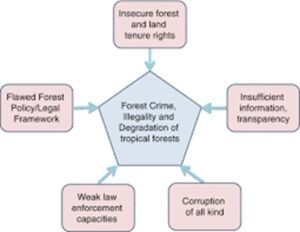
3.1 Economic Pressure and Poverty
• Some local people depend on forests for survival
• Lack of employment leads to involvement in illegal activities like poaching and logging
________________________________________
3.2 Demand for Forest Products
• High demand for timber, wildlife meat, and forest resources
• Illegal markets encourage smuggling and hunting
________________________________________
3.3 Weak Law Enforcement
• Difficult terrain makes monitoring forests challenging
• Limited staff and resources for forest departments
________________________________________
3.4 Corruption and Political Influence
• In some cases, illegal activities continue due to support from powerful groups
• Delayed action against offenders encourages crimes
________________________________________
3.5 Unplanned Development
• Expansion of roads, resorts, and plantations into forest areas
• Disturbance of natural habitats
________________________________________
4. Impacts of Forest Crimes
4.1 Environmental Impact
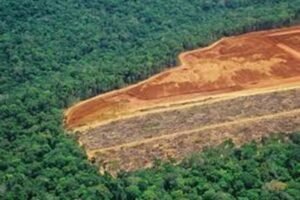
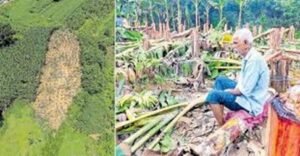
• Deforestation and habitat destruction
• Loss of biodiversity
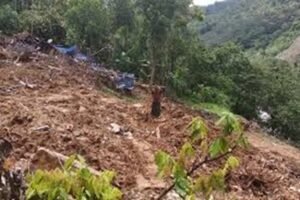
• Soil erosion and landslides
________________________________________
4.2 Wildlife Impact
• Decline in animal populations
• Disruption of food chains
• Increased risk of extinction
________________________________________
4.3 Social Impact
• Impact on tribal communities dependent on forests
• Increased human-wildlife conflict
• Loss of traditional livelihoods
________________________________________
4.4 Economic Impact
• Loss of forest resources
• Reduced tourism potential
• Government revenue loss
________________________________________
5. Government Measures and Actions
5.1 Forest Department Initiatives
• Regular patrolling and surveillance
• Use of informants and intelligence networks
• Arrest of offenders and seizure of illegal goods
________________________________________
5.2 Legal Framework
• Strict laws against poaching and illegal logging
• Wildlife Protection Act and Forest Conservation Act
________________________________________
5.3 Community Participation
• Involvement of local and tribal communities in forest protection
• Awareness programs to reduce illegal activities
________________________________________
5.4 Technology Use
• Use of drones and monitoring systems
• GPS tracking and camera traps
________________________________________
6. Challenges in Controlling Forest Crimes
• Dense forests and difficult terrain
• Lack of sufficient manpower
• Organized crime networks
• Limited awareness among local people
________________________________________
7. Prevention and Solutions
7.1 Strengthening Law Enforcement
• Increase forest staff and surveillance
• Strict punishment for offenders
7.2 Sustainable Livelihoods
• Provide alternative jobs for local communities
• Promote eco-friendly activities
7.3 Environmental Awareness
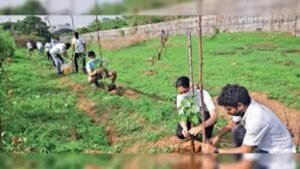
• Educate people about forest conservation
• Encourage responsible tourism
7.4 Strict Regulation of Development
• Control construction in forest areas
• Ban illegal quarrying and logging
________________________________________
8. Conclusion
Forest-related crimes in Wayanad district pose a serious threat to its rich biodiversity and ecological balance. Activities such as poaching, illegal logging, and forest encroachment are increasing due to economic pressures, demand for resources, and weak enforcement.
Protecting Wayanad’s forests requires a combined effort from the government, local communities, and society as a whole. Sustainable development, strict law enforcement, and environmental awareness are essential to preserve this valuable ecosystem for future generations.
________________________________________