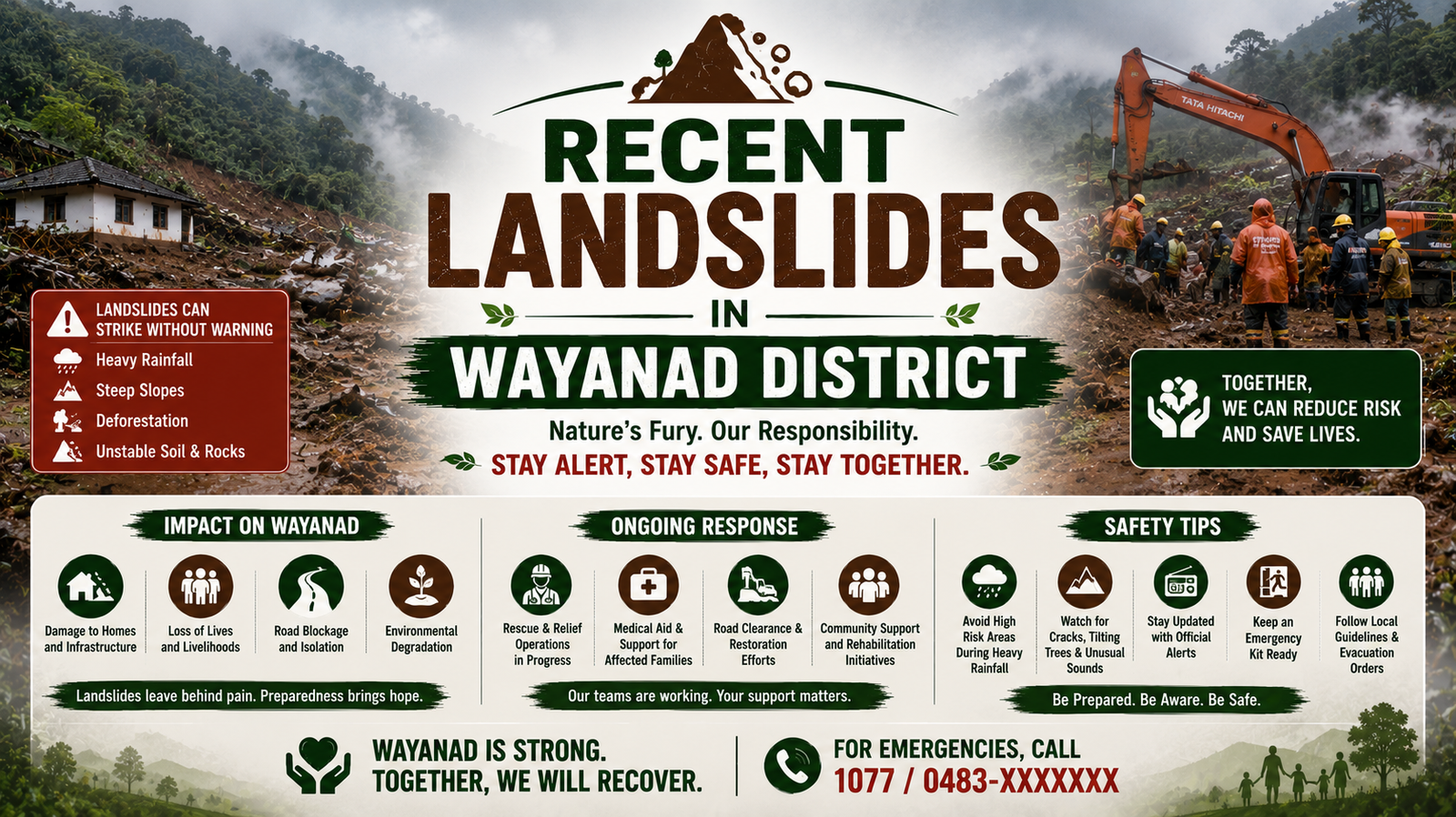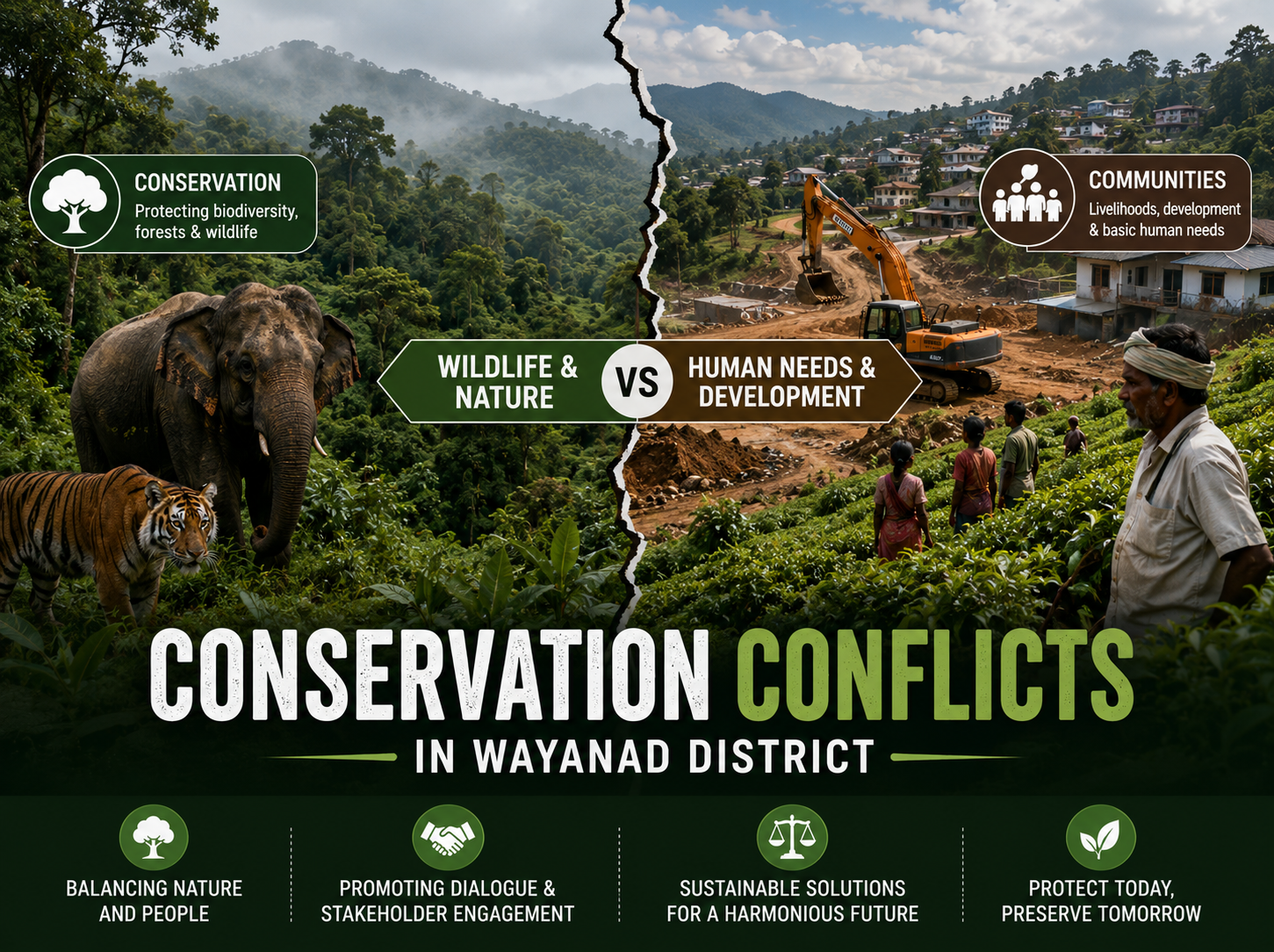

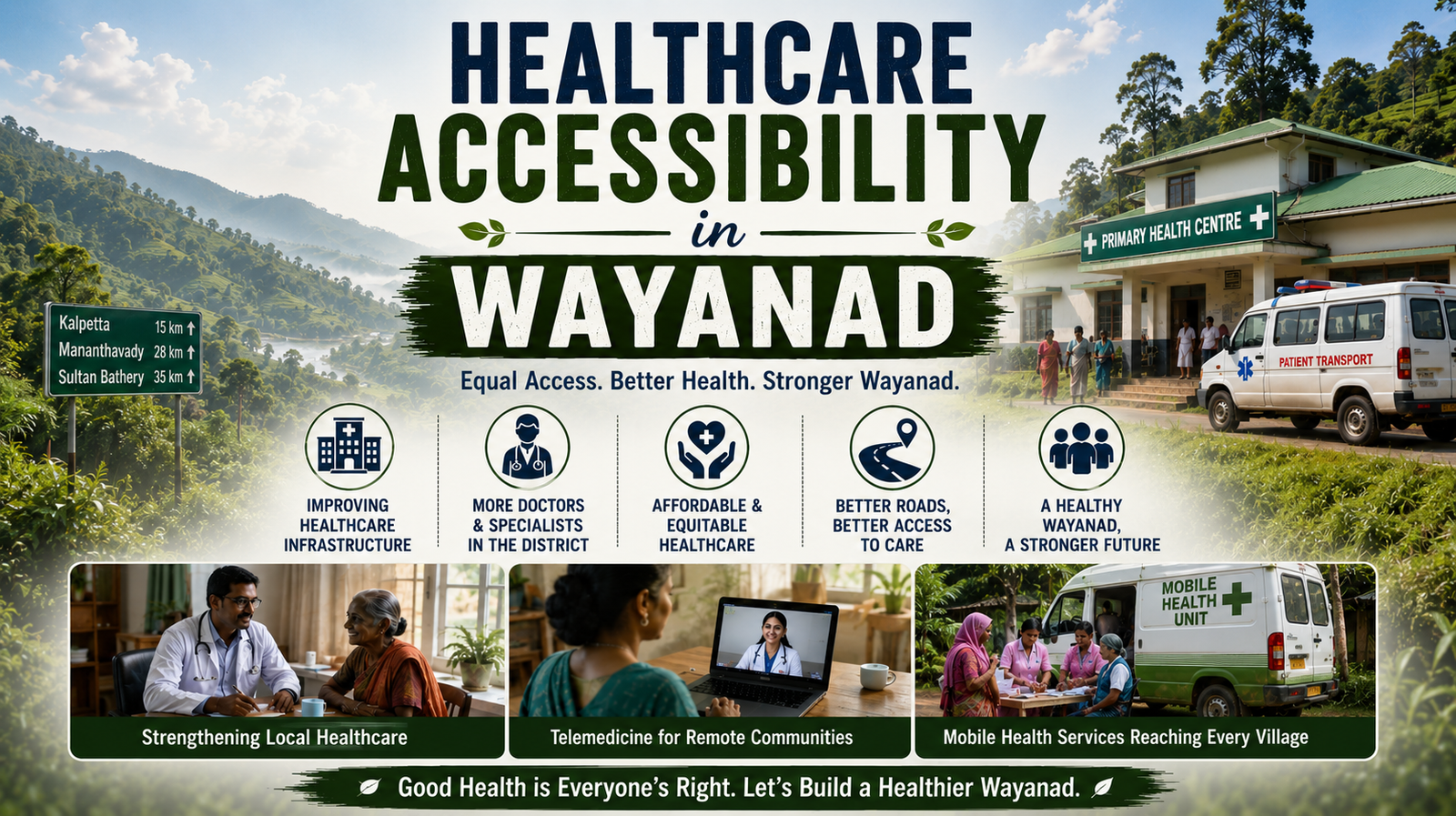
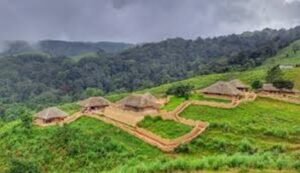
Wayanad District is a predominantly rural and hilly district located in the northeastern part of Kerala. Although Kerala is known for its strong healthcare system, Wayanad faces significant challenges in healthcare accessibility, especially for tribal and remote populations.
Healthcare accessibility refers to the ability of people to reach, afford, and receive quality medical services. In Wayanad, geographical isolation, poverty, and infrastructure gaps make access uneven.
- Healthcare Infrastructure in Wayanad
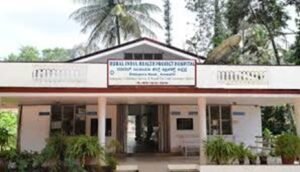
Wayanad has a mix of healthcare facilities, including:
- Government hospitals
- Community Health Centres (CHCs)
- Primary Health Centres (PHCs)
- Private clinics
The establishment of a government medical college has improved healthcare availability in recent years. However, the system is still under pressure due to increasing patient load and limited resources.
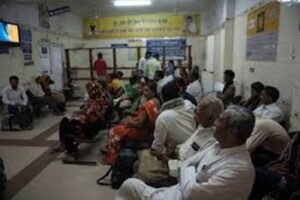
For example, patients at major hospitals often experience long waiting times and overcrowding, indicating strain on the system.
- Major Challenges in Healthcare Accessibility
3.1 Geographical Barriers
Wayanad’s terrain is characterised by the following:
- Hills and forests
- Scattered tribal settlements
- Poor road connectivity
These factors make it difficult for people to:
- Reach hospitals quickly
- Access emergency services
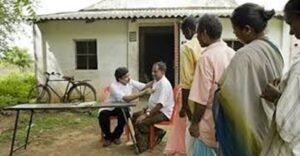
Many tribal communities live in remote areas with limited or no nearby medical facilities.
3.2 Limited Availability of Advanced Healthcare
Despite improvements, Wayanad lacks:
- Super-specialty hospitals
- Advanced diagnostic facilities
- Specialized doctors (e.g., cardiologists, neurologists)
Patients often need to travel to cities like Kozhikode for advanced treatment. A large percentage of cases that could be treated locally are still referred outside due to lack of specialists.
3.3 Shortage of Medical Professionals
Healthcare facilities face issues such as the following:
- Vacant doctor positions
- Frequent transfer of medical staff
- Lack of specialists
This leads to:
- Increased workload on existing staff
- Reduced quality of care
Many healthcare posts remain unfilled, affecting service delivery in the district.
3.4 Overcrowding and Delays
Government hospitals often face the following:
- Long queues for consultation
- Delays in diagnostic tests
- Waiting time for medicines
Patients may wait for hours to receive treatment due to high demand and limited infrastructure.
3.5 Economic Barriers
Although government healthcare is subsidised, many people still face the following:
- Costs of travel to distant hospitals
- Expenses for medicines not available in hospitals
- Loss of daily wages
For poor families, especially tribal communities, these costs can prevent timely access to healthcare.
3.6 Health Issues in Tribal Communities
Tribal populations in Wayanad face specific health challenges:
- Malnutrition
- Infectious diseases
- Genetic disorders such as sickle-cell anemia
Special programmes like health cards for sickle-cell patients have been introduced to improve access to treatment.
3.7 Lack of Emergency and Transport Services
Emergency healthcare is limited due to:
- Poor ambulance connectivity in remote areas
- Delays in reaching hospitals during emergencies
- Difficult terrain is affecting transportation
This can lead to serious consequences in critical situations.
3.8 Infrastructure and Safety Issues
Some healthcare facilities face the following:
- Lack of basic amenities
- Inadequate infrastructure
- Safety concerns for healthcare workers
Incidents like attacks on doctors highlight the need for better security and working conditions in hospitals.
3.9 Digital Divide in Healthcare
Although digital health systems are expanding, challenges remain:
- Limited internet access in remote areas
- Lack of awareness about online health services
- Incomplete implementation of e-health systems
This limits the benefits of digital healthcare solutions in Wayanad.
- Impact of Poor Healthcare Accessibility
4.1 On Individuals
- Delayed diagnosis and treatment
- Increased health complications
- Higher mortality risk in emergencies
4.2 On Families
- Financial burden due to medical expenses
- Loss of income due to illness
- Emotional stress
4.3 On Society
- Reduced productivity
- Increased poverty levels
- Health inequality between regions
- Government and Institutional Initiatives
5.1 Mobile Medical Units
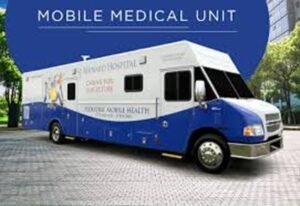
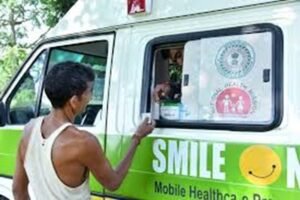
To address accessibility issues, mobile clinics have been introduced to do the following:
- Reach remote tribal areas
- Provide basic medical care at the doorstep
These initiatives help overcome geographical barriers in healthcare delivery.
5.2 Ayushman Bharat Scheme
Government hospitals in Wayanad provide services under national schemes like Ayushman Bharat, offering:
- Free or subsidized treatment
- Financial protection for poor families
5.3 Development of Medical College
The establishment of a government medical college has the following:
- Improved availability of healthcare services
- Increased number of doctors and facilities
However, more development is needed to meet the growing demand.
5.4 Special Health Programs
- Sickle-cell disease management programs
- Maternal and child healthcare services
- Immunization campaigns
These programmes aim to improve overall health outcomes in the district.
- Challenges in Implementation
Despite various initiatives, several issues persist:
- Lack of proper monitoring
- Delays in implementation
- Limited reach in remote areas
- Shortage of trained personnel
As a result, many healthcare schemes do not fully benefit the target population.
- Suggestions and Recommendations
7.1 Improve Infrastructure
- Build more hospitals in remote areas
- Upgrade existing facilities
7.2 Increase Medical Workforce
- Recruit more doctors and specialists
- Provide incentives for rural service
7.3 Strengthen Transport and Emergency Services
- Improve ambulance networks
- Develop better road connectivity
7.4 Promote Digital Healthcare
- Expand e-health services
- Improve internet access in rural areas
7.5 Focus on Tribal Health
- Provide culturally sensitive healthcare
- Increase awareness programs
- Improve nutrition and sanitation
7.6 Enhance Community Participation
- Involve local communities in health programs
- Strengthen the role of ASHA workers
- Conclusion
Healthcare accessibility in Wayanad District remains a critical challenge despite Kerala’s overall strong health system. The district’s unique geographical, social, and economic conditions create barriers that limit access to quality healthcare.
While government initiatives such as mobile clinics, health insurance schemes, and medical college development have improved the situation, significant gaps still exist.
A comprehensive approach involving:
- Infrastructure development
- Workforce strengthening
- Community participation
is essential to ensure equitable healthcare access for all sections of society in Wayanad.