
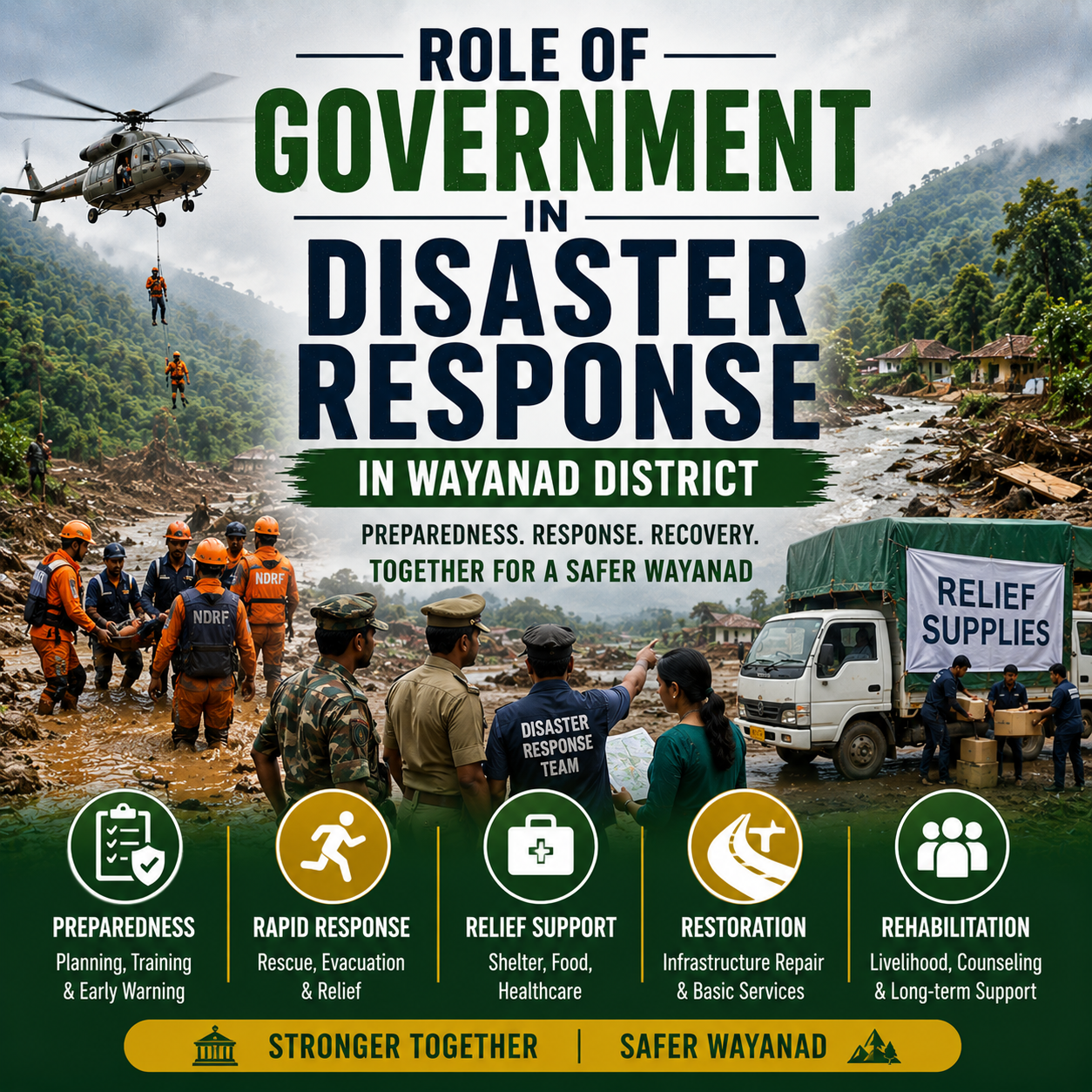
Wayanad district, located in the ecologically sensitive Western Ghats, is highly prone to natural disasters such as floods, landslides, and extreme rainfall. In recent years, these disasters have caused significant damage to lives, property, and the environment.
In such situations, the government plays a crucial role in disaster response by ensuring timely rescue, relief, rehabilitation, and long-term recovery. Effective government action helps reduce losses and supports affected communities in rebuilding their lives.
1. Institutional Framework for Disaster Response

District Disaster Management Authority (DDMA)
At the district level, disaster response is coordinated by the District Disaster Management Authority (DDMA). Its responsibilities include:
- Preparing disaster response plans
- Coordinating rescue and relief operations
- Ensuring proper communication between departments
The DDMA acts as the central coordinating body during emergencies.
State Government Role
The Kerala State Government provides the following:
- Policy guidance and funding
- Deployment of emergency services
- Technical support through disaster management agencies
State-level coordination ensures a well-organised and efficient response system.
2. Early Warning and Preparedness

Weather Forecasting and Alerts
Government agencies monitor weather conditions and issue early warnings about heavy rainfall, floods, and landslides. These alerts are shared through:
- Mobile notifications
- Television and radio
- Social media platforms
Early warnings help people take preventive measures and evacuate safely.
Preparedness Planning
Authorities develop disaster preparedness plans that include:
- Identification of vulnerable areas
- Evacuation routes and safe shelters
- Emergency resource allocation
Regular mock drills and training programmes are conducted to ensure readiness.
3. Rescue and Emergency Operations
Deployment of Rescue Forces
During disasters, the government deploys multiple agencies, such as:
- Fire and rescue services
- Police and health departments
- National Disaster Response Force (NDRF)
These teams carry out the following:
- Search and rescue operations
- Evacuation of affected people
- Immediate medical assistance
Use of Technology
Modern technology plays a key role in disaster response:
- Drones for aerial surveys
- GPS systems for navigation
- Communication tools for coordination
These tools improve the speed and efficiency of rescue operations.
4. Relief Measures and Support

Relief Camps
The government sets up relief camps in schools and community halls to provide the following:
- Food and clean drinking water
- Temporary shelter
- Medical care and sanitation
Special arrangements are made for vulnerable groups such as children, the elderly, and pregnant women.
Distribution of Essentials
Authorities ensure the supply of:
- Food kits and clothing
- Medicines and hygiene products
- Safe drinking water
This support helps affected families meet their basic needs during crises.
5. Rehabilitation and Recovery

Housing and Infrastructure Rebuilding
After the disaster, the government focuses on:
- Rebuilding damaged houses
- Repairing roads, bridges, and utilities
- Restoring public services
Financial Assistance
Compensation and financial aid are provided to:
- Families of victims
- Farmers and small business owners
- People who lost homes and property
This assistance helps communities recover economically.
6. Coordination with Agencies and Communities

Inter-Departmental Coordination
Government departments work together to ensure a smooth disaster response:
- Health department for medical aid
- Public works department for infrastructure repair
- Police for maintaining law and order
Collaboration with NGOs and Volunteers
The government collaborates with:
- Non-governmental organizations (NGOs)
- Local community groups
- Volunteers and youth organizations
This cooperation strengthens the overall disaster response system.
7. Infrastructure and Environmental Measures
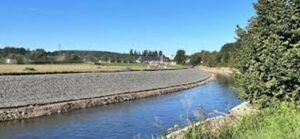
Flood and Landslide Mitigation
Government initiatives include:
- Strengthening riverbanks
- Improving drainage systems
- Stabilizing slopes with vegetation and engineering methods
Sustainable Development Policies
Efforts are made to:
- Restrict construction in high-risk zones
- Protect forests and natural resources
- Promote eco-friendly development
These measures help reduce future disaster risks.
8. Challenges Faced by the Government

Despite strong efforts, the government faces several challenges:
- Difficult terrain and remote locations
- Limited infrastructure in rural areas
- Increasing frequency of extreme weather events
- Need for more resources and coordination
These challenges can affect the speed and effectiveness of response efforts.
9. Future Improvements in Disaster Response

Advanced Technology Integration
Plans include:
- Use of AI for weather prediction
- Real-time disaster monitoring systems
- Improved communication networks
Strengthening Policies and Planning
Authorities aim to:
- Enhance disaster management policies
- Increase funding for infrastructure and training
- Improve coordination between agencies
Community Participation
Encouraging community involvement through awareness programmes and training will help build a disaster-resilient society.
Conclusion
The role of government in disaster response in Wayanad district is crucial and multifaceted, covering preparedness, rescue, relief, and recovery. Through effective planning, timely action, and coordination with various agencies, the government plays a key role in minimising the impact of disasters.
However, continuous improvement, use of modern technology, and active community participation are essential to ensure a safer and more resilient future for Wayanad.