
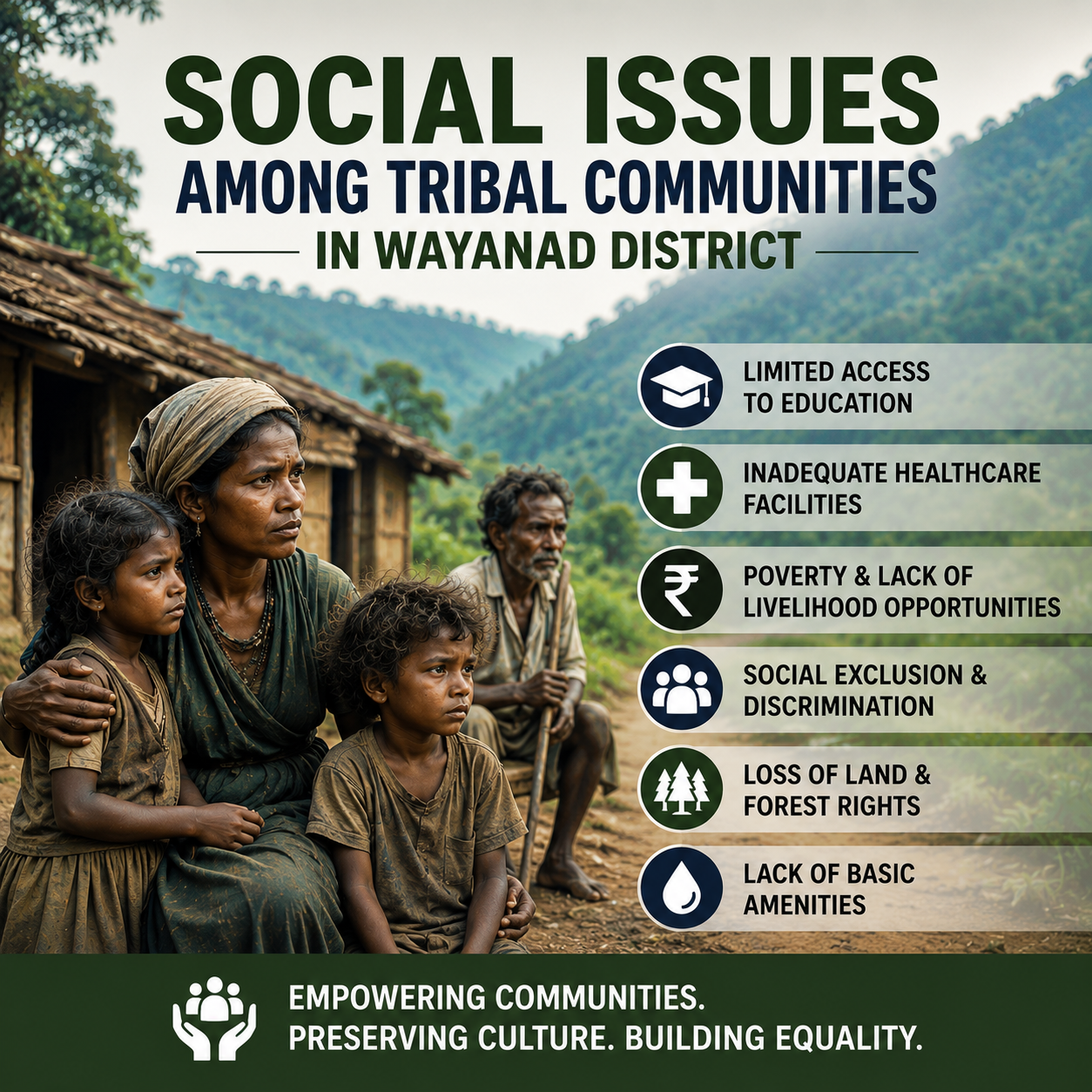
Social Issues Among Tribal Communities in Wayanad District
1. Introduction — Tribal Identity and Demography
Wayanad district, located in the Western Ghats of northern Kerala, has one of the largest concentrations of Scheduled Tribes in the state. Multiple tribal communities — including Paniyas, Adiyas, Kattunayakans, Kurichiyas, Kurumas, Ooralis, Uraali Kurumas, and others — reside in its hills and forest fringes.
Despite Kerala’s strong social indicators on many fronts, tribal communities in Wayanad continue to face deep‑rooted social and economic challenges linked to historical marginalisation, geographical isolation, and limited access to public services.
- Poverty and Housing Insecurity
2.1 Persistent Poverty Despite Official Claims
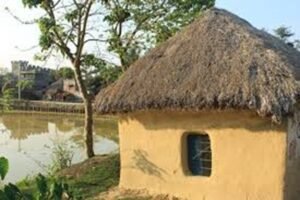
Although Kerala government reports describe Wayanad as “extreme poverty‑free”, the lived reality for many tribal families tells a different story. In remote hamlets like Kadassery Cholanaykka, tribal households live in leaking sheds without basic infrastructure, often struggling to afford even one proper meal a day. Earlier food support and welfare schemes have not translated into meaningful improvements for these families.
Many tribal families who were once brought out of deep forests with promises of better living conditions are still without access to stable income, adequate housing, or reliable food security — highlighting the gap between policy outcomes and ground realities.
- Social and Cultural Exclusion
3.1 Social and Economic Exclusion
Studies show that tribal groups such as the Adiya community experience high levels of social exclusion. This includes economic exclusion (limited income and work opportunities), political‑legal exclusion, service exclusion (poor access to health and education), and socio‑cultural exclusion (marginalisation from mainstream society). Such multifaceted exclusion affects their ability to integrate into broader societal structures.
3.2 Intra‑Tribal Social Hierarchies
Within tribal society, there are also internal social divisions. For example, ahead of elections in Wayanad, tribal communities protested against perceived monopolisation of political representation by the Kurichiya community. Groups such as the Paniya tribe, despite being the largest tribal group, feel excluded from political power and access to government jobs and resources.
This underscores that social exclusion does not affect all tribes equally, with some subgroups facing deeper marginalisation than others.
- Health Challenges and Social Problems
4.1 Poor Health Indicators
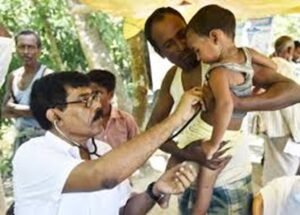
Research among tribal colonies such as the Pathipara tribal population documents significant social and medical problems, including alcohol and tobacco addiction, malnutrition, anaemia, tuberculosis, hepatitis B, and skin infections among children. Domestic violence, often linked with substance use, was identified as a major social issue.
4.2 Mental Health and Access to Care
Other studies point to limited access to mental health services for tribal communities in Wayanad, with untreated psychosis and high rates of substance abuse observed in interior colonies. Addressing this requires more accessible, culturally sensitive services tailored to tribal needs.
- Education and Skill Gaps
5.1 Limited Educational Opportunities
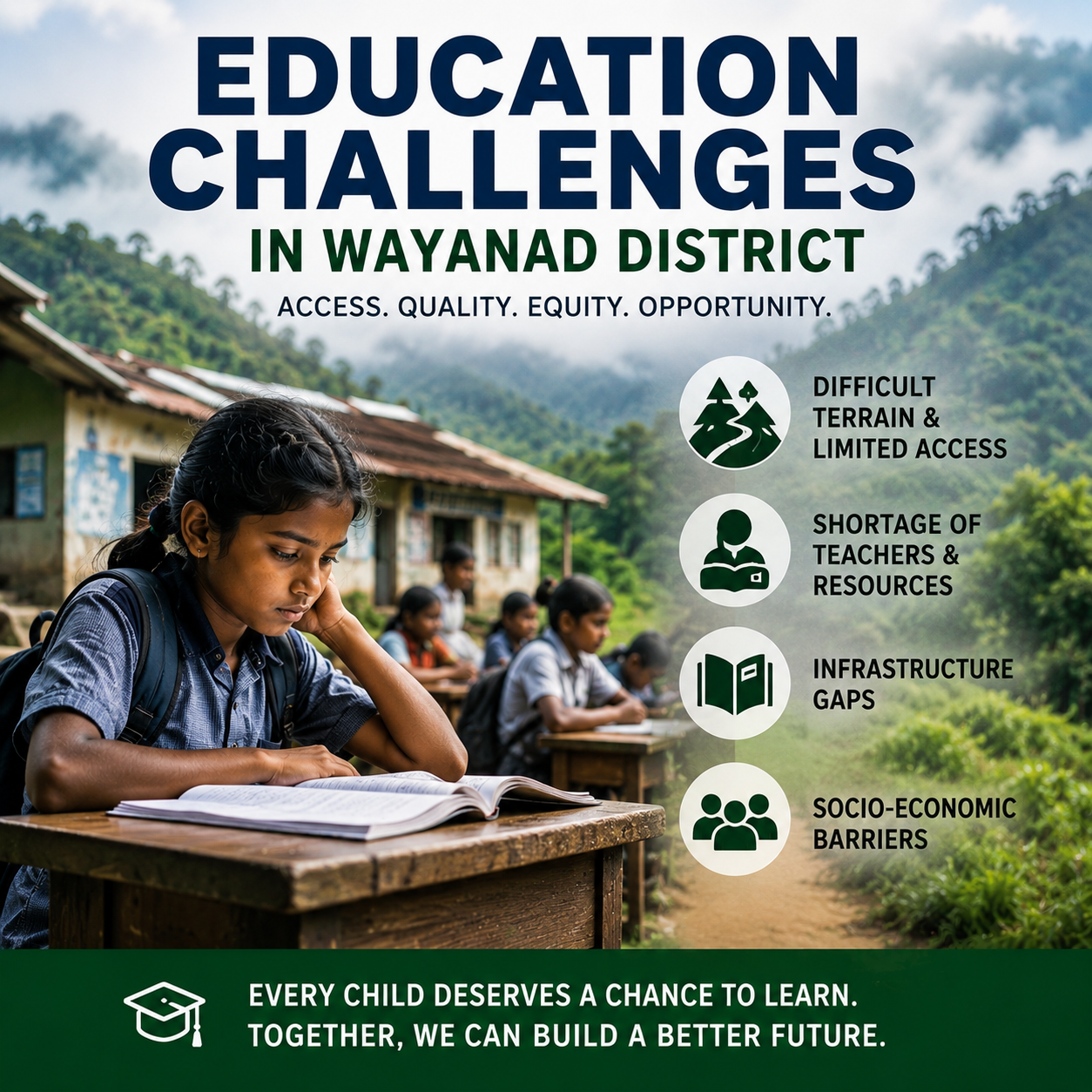
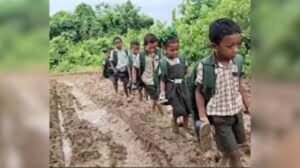
Tribal communities in Wayanad continue to struggle with lagging educational access and outcomes. Many tribal children have historically been excluded from formal education due to geographic isolation, lack of transport and infrastructure, and irregular availability of schools and teachers. Even when education is available, inconsistent support and engagement from authorities have meant limited impact in improving attainment levels.
Recent initiatives — such as enrolling children from remote settlements in formal schooling — show progress, but challenges remain in sustaining attendance, reducing dropouts, and ensuring quality education for tribal youths.
- Land Rights, Livelihoods and Economic Vulnerability
6.1 Land Alienation and Loss of Traditional Livelihoods
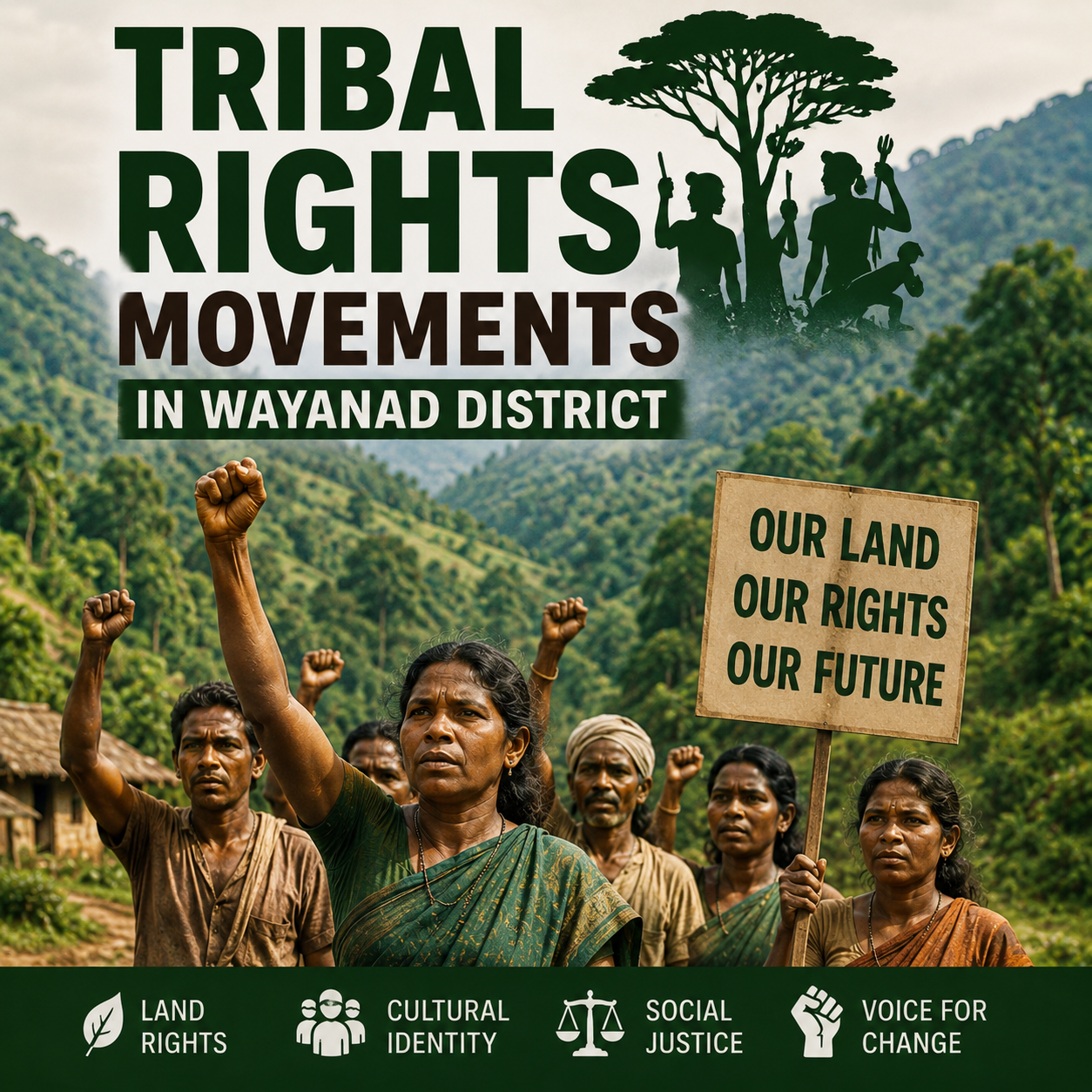
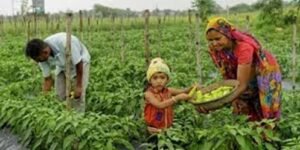
Historical development and land policy have often weakened tribal control over their traditional land and forest resources. Loss of access to forests – essential for food, traditional medicines, and seasonal work – undermines tribal livelihoods, pushing many into unsteady daily wage labour with low income and insecurity.
6.2 Unemployment and Economic Marginalisation
Unemployment, especially among educated tribal youth, is a growing concern. Despite possessing demographic strength, some tribal communities feel excluded from equitable job opportunities and face barriers to entering stable employment.
- Political Representation and Participation
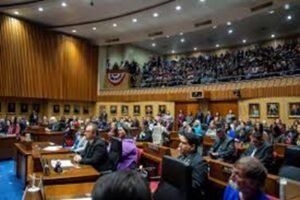
Political inclusion remains uneven for tribal groups in Wayanad. Protests over perceived monopoly in reserved constituencies point to the need for fairer electoral representation that reflects each community’s demographic and historical identity. Lack of representation reduces tribal influence in local decision‑making and allocation of government benefits.
Activism from tribal organisations advocating for greater representation and equity underscores the ongoing struggle for political empowerment.
- Gender Discrimination and Family Issues
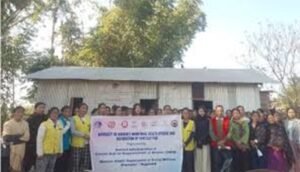
Gendered dimensions of social exclusion exacerbate vulnerabilities among tribal women. Studies show that tribal agricultural labourers, especially women, face higher discrimination compared to men, with limited access to education, media, political awareness, healthcare, and employment opportunities. These gaps contribute to an overall lower status of women in both tribal and broader rural society.
Such discrimination affects women’s ability to advocate for their rights, access benefits, and achieve economic independence.
- Government and Development Efforts
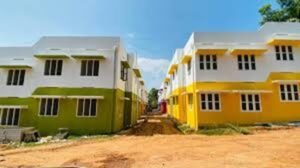
The Kerala government and national schemes have attempted to strengthen tribal welfare through housing, connectivity, education, and health programmes. However, restrictive eligibility criteria in schemes like Pradhan Mantri Gram Sadak Yojana‑IV have often left many tribal settlements ineligible for essential road connectivity, limiting access to healthcare, markets, and schools.
While some communities have benefited from development projects, bureaucratic gaps, policy design issues, and implementation challenges mean that many tribal households do not fully benefit from welfare programmes.
- Conclusion — Towards Inclusive Development
The tribal communities of Wayanad face a complex web of poverty, social exclusion, health challenges, limited education access, political marginalisation, and gender discrimination. Despite Kerala’s relatively advanced social sector, these groups remain among the most vulnerable segments of society in the district.
Addressing these persistent issues requires holistic, culturally sensitive strategies that ensure equitable access to education, healthcare, employment, political participation, and basic infrastructure. Stronger community engagement, effective programme implementation, and targeted policy reforms are critical to closing the gap between developmental rhetoric and real improvements in tribal livelihoods.